Back
Scroll to top

Highest Yield Savings Account

Personal Finances 2 min read

Ready to talk to an expert?

A high yield savings account is a great way to grow your money over the long term. First Bank has several options for those searching for the highest yield savings account available to them. Read on to learn more about the best ways to save your money for the future.

Save Your Hard-Earned Cash With A First Bank High Yield Savings Account

First Bank offers high yield savings accounts that will help you save your hard earned cash, so you can spend it however you want to in the future. Our Money Market Account gives you access to your savings, while you earn interest at a higher rate than most other savings account options. Money Market Account benefits include:

  • 6 free withdrawals per month*
  • Interest-earning account access
  • $1,000 minimum required to open account
  • Free online and mobile banking*
  • Easy money transfers
  • Free eStatements or paper statements

A certificate of deposit is also a good option for anyone looking for the highest yield savings account possible. If you do not need immediate access to your funds, a CD usually offers higher interest rates than savings and money market accounts. First Bank’s CDs are safe, FDIC-insured investments, and typically offer fixed interest rates.

Learn More About High Yield Savings Accounts Today

To learn more about the highest yield savings accounts in North Carolina and South Carolina, visit our website or stop by your local First Bank branch.

———

Sources:

Investopedia: http://www.investopedia.com/articles/pf/09/high-yield-savings-account.asp


*Withdrawal fee of $15 each after the first six free during the month. Federal regulations limit withdrawals of preauthorized transfers to six (6) per month, including checks, drafts, online transfers, telephone transfers and debit card purchases. You may conduct an unlimited number of withdrawals at the ATM, in person at a branch, or by mail when the check is mailed to you. *While First Bank does not charge for mobile banking, your mobile carrier’s message and data rates may apply.

Ready to talk to an expert?

Share:

You may be interested in...

a wolf in sheep's clothing works at a scam Can You Spot a Scam? Can you spot a scam? Most people are confident that they can tell the difference between fact and fiction, but the truth is that it isn’t always easy to fend off fraud. Want to test your knowledge? Click through the scenario below and think about whether it’s a helpful notice from your bank or if it might be a scam. Read on to find out the answer! Is this your bank... or is it fraud? 1) Your phone rings. Caller ID shows the number as your local bank. 2) You pick up the phone. The caller addresses you by name and seems to be familiar with your bank account number, address, and transaction history. 3) They warn you of possible fraud on your account. The caller asks if you're familiar with several recent transactions and reassures you that they'll help you protect your account. 4) They ask you to confirm your identity. Before the caller can help, they ask you to verify your identity by sharing the last 4 digits of your debit card or a one-time passcode. So... what do you think? Is the person on the phone a cunning fraudster or an honest banker? How to fight fraud and find red flags In the scenario above, the call is probably a scam. But the caller’s familiarity with your personal details may cause you to drop your guard long enough for them to retrieve your Secure Access Code (SAC) or a one-time code texted to your phone. They may use that code to change the password of your bank account, letting them in and locking you out, or to add your card to their digital wallet, which lets them use your card to make unauthorized purchases. It’s important to know that First Bank will never ask you for information like a one-time passcode if we’re the ones reaching out to you. Here are some other common red flags to look out for… Keep an eye out for these common tricks: Unexpected calls or messages, even if they look official. If you get any kind of communication claiming to be from First Bank — or another trusted source — stop and think about whether it might be fraud before responding. Caller ID and emails are easily faked. Pressure to act fast. Scammers often create a false sense of urgency to keep you from calmly thinking things through. They may claim that your account is at risk or that you owe money on a debt. Remember that legitimate businesses are unlikely to rush you. Requests for sensitive information. While we may send you a one-time code to verify your identity after you call us, remember that a First Bank employee will never reach out to you and then ask for your one-time passcode, PIN, or password. ` Being told not to contact your bank. Fraudsters may say that your local branch is under investigation for misconduct or that your usual banker isn’t available. Don’t be afraid to hang up and call a trusted number to confirm whether there’s really a problem. Unusual payment methods. If you’re ever asked to pay with a gift card, wire money to a specific account, or use a payment app, stop and call your local bank. Cryptocurrency and large cash withdrawals are also common. Scammers prefer payments like these because they’re hard to trace, and it’s often impossible to recover stolen funds. Learn more about financial fraud If you suspect a scam, here’s what to do. Need to make a quick decision in the heat of the moment? Remember these important fraud protection tips: ✅ Always double-check the details ✅ Stop and think through the situation ✅ Keep your private information secure ✅ Talk to someone you trust — like your local bank ✅ Only make payments through familiar platforms ✅ Don’t be afraid to trust your intuition And remember — fraudsters don’t only go after regular folks. They target business accountholders, too. Keep an eye out for invoices from unfamiliar vendors, urgent payment requests, unusual payroll changes, and spoofed emails. Some business accounts, like First Bank’s Business Elite, offer built-in treasury tools and fraud protection. 5 min read
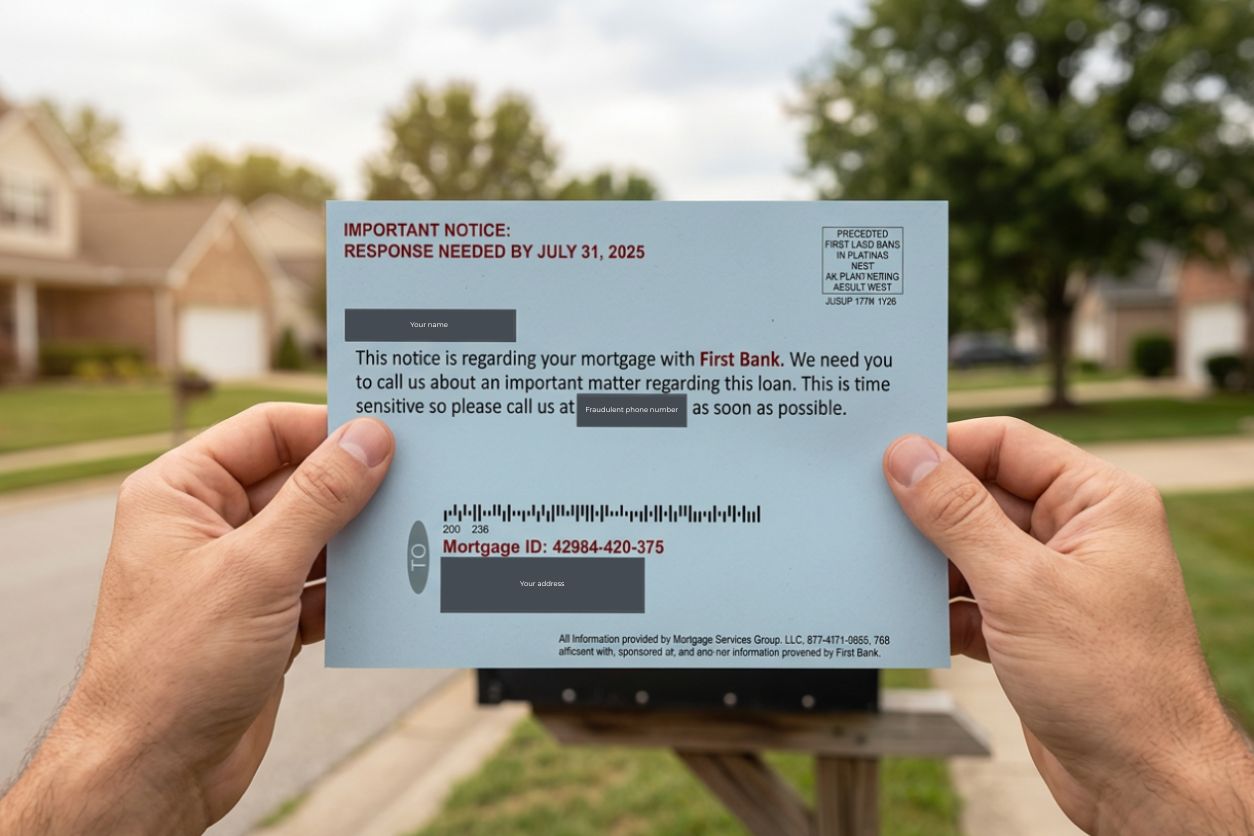
Image for tile. Received a Mortgage Postcard in the Mail? Here’s What to Know What do these postcards look like? While designs may vary, recent postcards reported by customers have included: A reference to a mortgage with First Bank Language suggesting an urgent response is needed A phone number to call regarding a loan matter A “Mortgage ID” or similar reference number Fine-print disclosures indicating the sender is not affiliated with First Bank Because the postcards mention First Bank and a mortgage loan, some recipients may mistakenly believe the communication came from the bank. How did the sender get my information? Mortgage information, including the existence of a mortgage and the lender’s name, is available through public land records. First Bank does not sell customer mortgage information to third parties for these mailings. In many cases, companies use publicly available property and mortgage records to identify homeowners and send marketing solicitations. Is this mailing from First Bank? No. First Bank does not use unaffiliated third-party companies to send mortgage postcards requesting that customers call unfamiliar phone numbers regarding urgent loan matters. If First Bank needs to contact you about your mortgage, communications will come through established First Bank channels. Should I call the number on the postcard? Customers should exercise caution before contacting unfamiliar companies that request personal or financial information. Before sharing any information, carefully review the mailing and verify the sender. If you are uncertain whether a communication is legitimate, contact First Bank directly using the phone number listed on our website, your mortgage statement, or other official bank communications. What should I do if I receive one of these postcards? If you receive a mortgage-related postcard that appears to reference First Bank: Review the mailing carefully, including any fine-print disclosures. Do not provide personal, account, or financial information to an unfamiliar party. Contact First Bank directly if you have questions about your mortgage or the legitimacy of a communication. Dispose of the postcard if you determine it is an unsolicited marketing piece. How can I verify a communication from First Bank? If you ever receive a phone call, email, text message, or mail piece that appears suspicious, contact First Bank directly using a trusted phone number or contact method before responding. Protecting our customers’ information remains a top priority, and we encourage customers to remain vigilant when receiving unexpected communications related to their financial accounts. Did you receive a suspicious mortgage postcard? Before calling any number listed on the mailing, contact First Bank directly using the customer support phone number on our official website to verify the communication. First Bank Customer Support Telephone: 1-866-792-4357 Hours: Mon – Fri: 7am – 8pm Saturday: 9am – 4pm Sunday: Closed   3 min read
Image for tile. Learn How to Be A Phishing Attack Detective With a number of people relying heavily on online services and communication for work and personal life, cybercriminals have increased their volume of attempts to acquire personal information. One of the most common ways they may try to gain access to this secure information is through phishing attacks. This causes problems for both individuals and companies when they are trying to keep information safe. What is phishing? As described by phishing.org, “Phishing is a cybercrime in which a target or targets are contacted by email, telephone or text message by someone posing as a legitimate institution to lure individuals into providing sensitive data such as personally identifiable information, banking and credit card details, and passwords. The information is then used to access important accounts and can result in identity theft and financial loss.” These attempts may look like someone posing as a coworker, asking for input, including links or attachments, among other things. Scammers attempt to gain access to user information every day, but when you know what to look for you don’t have to become a victim. Take a look at our playlist for a few tips to help you become a phishing email detective and use them in your everyday life. It is always a good idea to double check information before opening anything from unknown senders. In episode 1, you see Gil Ubble attempting to open an email from an external source. Upon further investigation, the domain name does not match and the email is not from someone at the company. Often times people are caught in these attacks because they aren’t paying close enough attention to who the email came from. If the email in question looks similar to something that provider would send, do not click on links or attachments. Instead, go directly to that company site or give them a call to make sure the information is accurate. If the email comes from someone who seems to work at your company, but you do not know the person, check to see if they actually work there. Even if the person’s email shows that they work at your company, check the email for other signs of false information. Scammers may go to extra lengths to spoof email addresses 4 min read
First Bank logo
Privacy Overview

This website uses cookies so that we can provide you with the best user experience possible. Cookie information is stored in your browser and performs functions such as recognizing you when you return to our website and helping our team to understand which sections of the website are the most popular and useful.