Back
Scroll to top

How to Get the Most Out of Your Commercial Line of Credit

Running A Business 4 min read

Ready to talk to an expert?

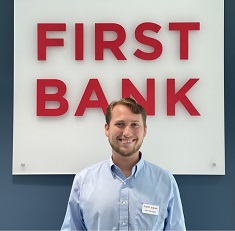
John Harrington's headshot We recently had the good fortune to connect with First Bank team member John Harrington to pick his brain about all things business lending. Based out of Charlotte, NC, John is the Senior Credit Analyst for First Bank’s Western Region. John has worked with hundreds of commercial clients spanning from small businesses to some of the country’s largest corporations. As an analyst, John’s focus is on evaluating the risk inherent in each loan request and building structures tailored to his clients in order to minimize that risk and maximize the benefit for the client.

Here John provides the first article in a series about the ins and outs of commercial lending, loan management, and business finance best practices.

When things are going well for your business, it can feel like you’re flying high. But if you hit a pocket of unanticipated expenses, the dip in your cash flow might have you looking for parachutes.

That’s where one of the most common types of business or commercial lending, the line of credit, can come in handy. The line of credit is revolving in nature, meaning that it doesn’t have a set repayment term, and you can take cash out and put it back basically as you please so long as you make small minimum monthly payments.

A line of credit offers flexibility and quick access to liquidity, but it can be misused, which can lead to turbulence either for your company or for your relationship with your bank.

How to Avoid Turbulence

Businesses generate revenue on a daily basis, but most (outside of retail) do not receive that revenue as cash at the same time that it’s generated. Instead, the revenue generally becomes accounts receivable (AR).

AR is a promise to pay in a certain span of time; such as 30 days. For example, if a customer purchased something from you on July 1, they would get the benefit of receiving that product or service today but would have until August 1 to pay for it. This is very convenient for the customer of course, but not for your business.
In addition to generating revenue every day, most businesses also generate costs and expenses. While you too may be able to purchase things on AR, some vendors will require payment immediately. That’s where timing issues with when your money can make things complicated.

Not having sufficient and liquid funds can prove catastrophic to a business. Bills are defaulted on, services stop, employees quit, and the whole company is endangered. Rather than constantly monitoring your cash flow to make sure its sufficiently flexible at all times, a line of credit (LOC) offers a convenient alternative. Using a LOC as a liquidity reserve to finance your costs and expenses allows you to be more strategic with your cash and gives you the assurance that you will not miscalculate and have a cash shortage.

Coming In for a Successful LOC Landing

The best way to utilize your LOC is to use it to pay all of your day-to-day bills, letting it be your liquidity reserve and leaving your cash for more strategic things. Then as you collect on your AR, use the appropriate portion to pay off the LOC.

Following this strategy, your cash is net of all costs and expenses, meaning it is true liquidity, and not a temporary balance that may shrink when a bill comes in. This allows you to take your profit and confidently use it for the things you want to use it for; whether that’s buying new equipment, funding growth initiatives, or paying yourself or others more.

See this strategy in action with the second article in this series: Financing Your Operating Cycle.

If you’re ready to explore using a LOC for easier cash management (a great way to ensure peace of mind for you and your bookkeeper!) reach out to your local First Bank business banker today. Your options will be tailored to meet your specific needs, and rates remain low*.

Find the right solution for your business.
Hear from others who bank with us.

*Loans subject to credit approval.

Ready to talk to an expert?

Share:

You may be interested in...

Small Business Line of Credit Obtaining a line of credit for your small business can help your entrepreneurial spirit take the company to the next level. This line of credit can be a more affordable option than a business loan because you only pay interest on the money you utilize. Acquiring this type of loan depends on your current credit score and how much a bank perceives you as a risk. For small businesses, a line of credit is a good short-term option that works much like a credit card in the way it provides extra funds or cushion for financing “ongoing working capital.” Credit lines can be used in a variety of ways to benefit your business, including: remodeling, expanding or upgrading your facilities; buying new technological equipment; purchasing extra inventory for future events; launching a “new online marketing campaign”; creating a “new product prototype” or pursuing a “promising business opportunity”; and covering “unexpected expenses.” No matter which benefit you’re looking for with a small business line of credit, there are some factors to consider when determining if it’s the best financial option for your business’ cash flow. Top 3 Advantages of Obtaining a Small Business Line of Credit Stay in control—A line of credit enables you to further your business goals without bringing on investors, who will likely want at least some, if not a large portion, of control over your business in exchange for their financial backing. You also don’t have to “dip into personal savings or ask friends and family for money.” Financial flexibility—As previously mentioned, this credit line gives you more flexibility than a closed-end loan because you only “access money when you need it,” and you don’t have to pay interest on the funds you don’t use. Establish credit history—Building a good credit history for your business now helps to better your chances of obtaining “future credit accounts and loans.” Get a Flexible Line of Credit for Your Small Business at First Bank At First Bank, small businesses hold a special place in our hearts. Since 1935, when we opened our first branch in Troy, North Carolina, we’ve been known as a community bank that strives to assist local businesses get the financial support they need to achieve their 3 min read
Image for tile. How to finance rapid business growth Making things grow, one decision at a time Mary stands between two deliver trucks, unsure what to do next. Another large order just came in, which is good news — until she looks at the calendar. Both trucks are already booked. Her team is stretched thin. And the equipment she needs to keep up? It’s going to cost more than what she has available as liquid assets to reinvest. As a business owner, you have to be ready when opportunity knocks. Times like this are when a business loan or revolving line of credit can help you take the next big step. New opportunities don’t wait around Every growing business eventually hits a point where opportunity exceeds cashflow. But that doesn’t mean you have to slow down — it just means you need to be ready. Rapidly growing businesses might have to deal with: High upfront costs for new equipment, employees, or inventory Rising vendor costs in anticipation of higher customer demand More opportunities in the pipeline than capacity allows Managing that kind of growth can feel like trying to pace yourself for a marathon when every day is a sprint. You worry that you won’t be able to keep up, but you also have to be careful about overcommitting resources. You want to keep growing, but you’re afraid of taking on debt Debt is uncomfortable. There’s always a certain degree of uncertainty — what if the new deals don’t come through, or the economy slows down, or the market shifts? Hesitation is healthy, but it’s important to realize that debt isn’t automatically bad. The structure of debt matters just as much as the amount, because not all types of financing are right for all types of business. Frequent, small, short-term cashflow gaps may be better served by a business credit card. Larger, intermittent gaps can be solved with a revolving line of credit. A major one-time expense may demand a business loan. The key isn’t to borrow more or less. It’s to borrow smart. Know the nuances of different types of business loans We firmly believe that business banking isn’t about filling an order — it’s about collaborating with business owners to provide the best possible service. That’s why we offer a range of financing products to fit the way businesses actually operate. Business loans When you need capital for a specific purpose, like new equipment, a traditional business loan lets you take out a defined lump-sum amount with structured repayment terms. Best for planned expenses that you’ll pay off over the long term. Lines of credit When you have ongoing working capital needs, a line of credit offers flexibility. You can draw from it whenever you need, only pay interest on what you use, and access new funds as soon as you repay whatever you took out. Best used as a buffer for managing cashflow gaps. SBA loans In some cases, government-backed SBA loans can offer more flexible terms than traditional loan structures. The right option will always depend on your business, your goals, and your tolerance for risk. A local banker can help you decide whether SBA loans are a good fit for your business. Commercial real estate loans A commercial mortgage helps you find the perfect place — whether it’s an office, a retail park, a warehouse, or something else. Use a loan like this to build your investment portfolio or help your business scale. Think your business would benefit from smart financing? Debt doesn’t have to be an albatross around your neck. It can help you say “yes” to new opportunities without hesitation and make investments that support your business in the long term. That’s why we believe that smart financing starts with a conversation — not an application. Talk to a local banker today to learn how we can help your business grow. 4 min read
First Bank logo
Privacy Overview

This website uses cookies so that we can provide you with the best user experience possible. Cookie information is stored in your browser and performs functions such as recognizing you when you return to our website and helping our team to understand which sections of the website are the most popular and useful.