Back
Scroll to top

High Interest Checking Accounts – Wilmington, NC

Personal Finances 2 min read

Ready to talk to an expert?

A high-interest checking account keeps your earnings coming long after you’ve put it in the bank. Wilmington, NC, has five First Bank locations with high-interest checking account options.

Checking Account Options at First Bank

Our Everywhere Plus account piles up interest with a minimum balance or average collected balance. The Everywhere Premium option earns interest at a minimal balance requirement, as well as offers an unlimited number of withdrawals at non-First Bank ATMs. Both accounts are pleased to offer:

  • Free online and mobile banking
  • Free online bill pay
  • Free monthly eStatements or paper statements
  • Rewards benefits for eligible First Bank credit cards
  • Free account alerts via phone, email or text message

Earn Interest for Your Business

First Bank’s high-interest checking accounts don’t end with our personal accounts. We have two business checking account options perfect for your financial needs.

Our Business Interest account provides interest if the minimum balance is maintained and offers all of the above features, plus 24-hour telephone banking, 250 free transactions per month and up to $10,000 in cash or coin deposits at no charge.

Business Advantage includes all the features of Business Essentials Plus but allows for 500 free transactions per month and up to $25,000 in cash or coin deposits.

Visit First Bank Today

Visit one of Wilmington’s First Bank locations to learn more about high interest checking accounts.


Account holders may avoid the Monthly Maintenance Fee by meeting any of the requirements listed in the Keep it Fee FreeTM section of the account summary table for their account type. Other account service fees may apply as described in the Account Services Fee Schedule available on our website at fees or at your local branch. Eligible personal deposits include checking, savings, Money Market, CD, or IRA. Eligible personal loans do not include residential mortgage loans. Direct deposit defined as external ACH credit. Transfers from other First Bank accounts or deposits made at a branch do not apply. A transaction is defined as any checks paid, deposits, each deposited item, ATM withdrawals, debit card transactions, online and telephone funds transfers, and ACH debits and credits.

———

Sources:

Investopedia: http://www.investopedia.com/terms/m/minimum-balance.asp

Investopedia: http://www.investopedia.com/terms/i/interest.asp?ad=dirN&qo=investopediaSiteSearch&qsrc=0&o=40186

Ready to talk to an expert?

Share:

You may be interested in...

Budgeting 101: Personal Budget Categories When it comes to creating a personal budget, it can feel like there are a million financial categories to consider. In order to create a successful budget, everything should be accounted for, from large expenses like your mortgage and car payment to smaller expenses like your gym membership and Netflix subscription. A list of recommended personal budget categories is a great place to start when creating a budget. Here are two ways you can get the most out of the list: Go through the list and check off each category that applies to you, then add those categories/items to your personal budget spreadsheet. Create a comprehensive list of everything you spend each month, then go through the categories list to see if there is anything you might have forgotten and need to add to you personal budget spreadsheet. Recommended Budgeting Categories Consider including these categories when you create your own budget: Housing Mortgage or rent Property taxes Household repairs HOA fees Transportation Car payment Car warranty Gas Tires Maintenance and oil changes Parking fees Repairs Registration and DMV Fees Food Groceries Restaurants Pet food Utilities Electricity Water Garbage Phones Cable Internet Clothing Adults’ clothing Adults’ shoes Children’s clothing Children’s shoes Medical/Healthcare Primary care Dental care Specialty care (dermatologists, orthodontics, optometrists, etc.) Urgent care Medications Medical devices Insurance Health insurance Homeowner’s or renter’s insurance Home warranty or protection plan Auto insurance Life insurance Disability insurance Household Items/Supplies Toiletries Laundry detergent Dishwasher detergent Cleaning supplies Tools Personal Gym memberships Haircuts Salon services Cosmetics (like makeup or services like laser hair removal) Babysitter Subscriptions Debt Personal loans Student loans Credit cards Retirement Financial planning Investing Education Children’s college Your college School supplies Books Savings Emergency fund Big purchases like a new mattress or laptop Other savings Gifts/Donations Birthday Anniversary Wedding Christmas Special occasion Charities Entertainment  Alcohol and/or bars Games Movies Concerts Vacations Subscriptions (Netflix, Amazon, Hulu, etc.) Get Professional Personal Finance Advice Give First Bank’s free MyMoney tool in online and mobile banking a try to get started on your budget or to calculate your net worth. If you need guidance from a professional when creating your budget, find a First Bank near you. You can also learn more about different types of banking services, personal budgeting, saving money, investing and more using First Bank’s online Financial 2 min read
Image for tile. Learn How Much You Should Be Saving Each Year Wondering how much you should be saving each year? Many specialists believe in the 50/20/30 budget: 50% is spent on necessary expenses (e.g. credit card bills, rent), 20% of your income is put into savings, and 30% is left for your luxury expenses (e.g. a new TV, restaurants). By following this rule, you can comfortably begin saving for retirement or an emergency fund while having enough to make ends meet. How Much Should I Be Saving? While there’s no one-size-fits-all answer to how much you should have saved, there are some goals you should focus on during your 20s, 30s, 40s and beyond. Here’s a recommended savings road map to guide you at any age: 20s: Focus on building your credit, paying off loans and save something each month. Even if you’re not able to save quite up to 20% of your income, try starting at 10%. 30s: Allocate more money into savings, especially if you’re thinking about starting a family, buying a new home, or taking on a few home repairs soon. You should be putting at least 15% of your income into savings, if not more. Additionally, you should continue to pay off all non-mortgage debt. 40s: Get your credit card debt under control and up the amount you’re putting away into savings again. By this time, you should aim to have more than your current salary put away in savings. 50s: Max out your retirement contributions and pay off your mortgage. You should aim to have as much of your income and investments working towards your retirement goals as possible. Ideally, you have more than two times your current salary set aside in savings. Start Saving for Your Future Today Changing the way you spend can feel overwhelming at first and requires discipline. However, in time, you’ll get used to what is necessary and how much of your luxury expenses can be cut or limited. Take charge of your finances and invest in your future. For more questions about how much you should be saving each year, or how to get started, contact your local First Bank branch today!  ——— Sources: Experian: https://www.experian.com/blogs/ask-experian/how-much-should-you-save-each-month/ Huffington Post: http://www.huffingtonpost.com/simple-thrifty-living/in-your-20s-40s-60s-the-b_b_5686551.html Money Under 30: http://www.moneyunder30.com/how-much-do-you-need-to-have-saved-for-retirement 2 min read
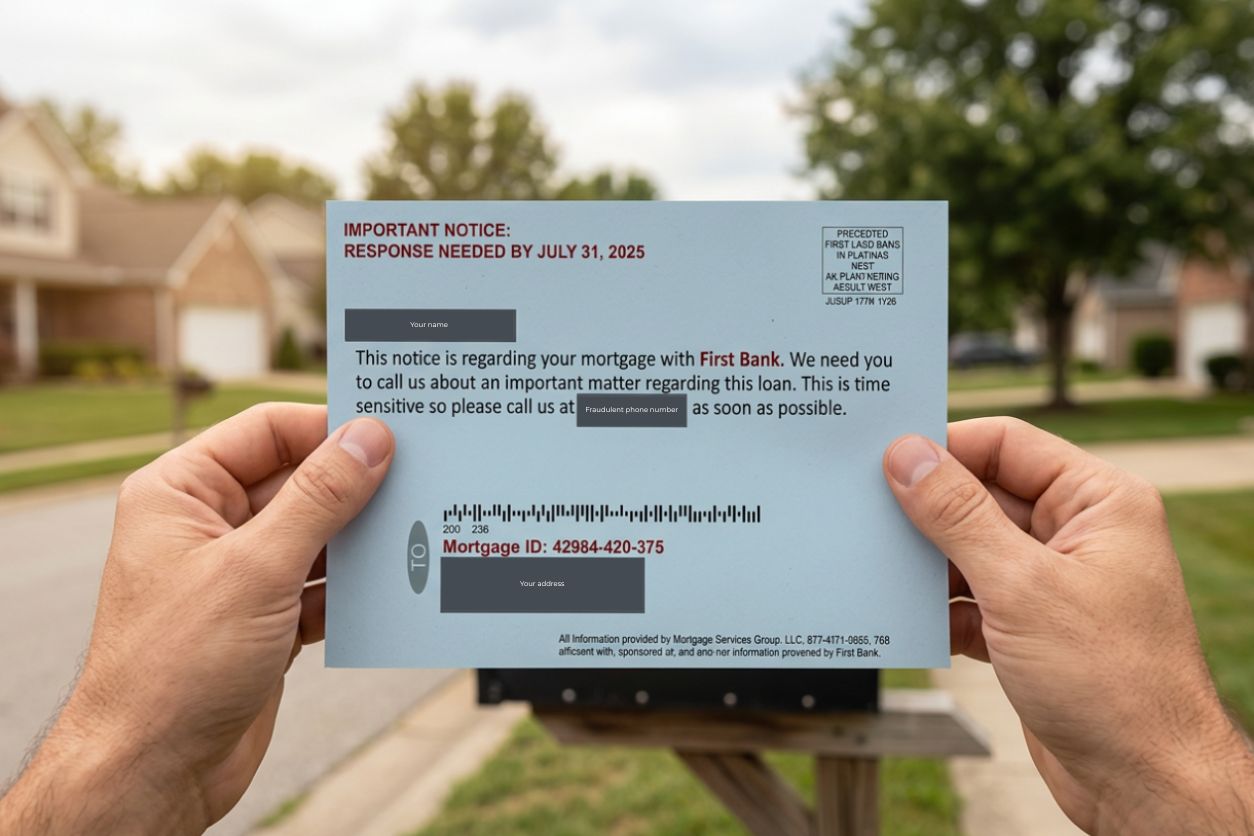
Image for tile. Received a Mortgage Postcard in the Mail? Here’s What to Know What do these postcards look like? While designs may vary, recent postcards reported by customers have included: A reference to a mortgage with First Bank Language suggesting an urgent response is needed A phone number to call regarding a loan matter A “Mortgage ID” or similar reference number Fine-print disclosures indicating the sender is not affiliated with First Bank Because the postcards mention First Bank and a mortgage loan, some recipients may mistakenly believe the communication came from the bank. How did the sender get my information? Mortgage information, including the existence of a mortgage and the lender’s name, is available through public land records. First Bank does not sell customer mortgage information to third parties for these mailings. In many cases, companies use publicly available property and mortgage records to identify homeowners and send marketing solicitations. Is this mailing from First Bank? No. First Bank does not use unaffiliated third-party companies to send mortgage postcards requesting that customers call unfamiliar phone numbers regarding urgent loan matters. If First Bank needs to contact you about your mortgage, communications will come through established First Bank channels. Should I call the number on the postcard? Customers should exercise caution before contacting unfamiliar companies that request personal or financial information. Before sharing any information, carefully review the mailing and verify the sender. If you are uncertain whether a communication is legitimate, contact First Bank directly using the phone number listed on our website, your mortgage statement, or other official bank communications. What should I do if I receive one of these postcards? If you receive a mortgage-related postcard that appears to reference First Bank: Review the mailing carefully, including any fine-print disclosures. Do not provide personal, account, or financial information to an unfamiliar party. Contact First Bank directly if you have questions about your mortgage or the legitimacy of a communication. Dispose of the postcard if you determine it is an unsolicited marketing piece. How can I verify a communication from First Bank? If you ever receive a phone call, email, text message, or mail piece that appears suspicious, contact First Bank directly using a trusted phone number or contact method before responding. Protecting our customers’ information remains a top priority, and we encourage customers to remain vigilant when receiving unexpected communications related to their financial accounts. Did you receive a suspicious mortgage postcard? Before calling any number listed on the mailing, contact First Bank directly using the customer support phone number on our official website to verify the communication. First Bank Customer Support Telephone: 1-866-792-4357 Hours: Mon – Fri: 7am – 8pm Saturday: 9am – 4pm Sunday: Closed   3 min read
First Bank logo
Privacy Overview

This website uses cookies so that we can provide you with the best user experience possible. Cookie information is stored in your browser and performs functions such as recognizing you when you return to our website and helping our team to understand which sections of the website are the most popular and useful.