Back
Scroll to top

The Self-Storage Industry: Big Money, Big Size [INFOGRAPHIC]

Running A Business 1 min read
Row view of a self-storage facility

Ready to talk to an expert?

For most of us, self-service storage is something we only think about when we need somewhere to put our extra stuff. You probably pass a handful of facilities on your daily commute without blinking an eye.

But self-storage is actually a booming industry, with thousands of new facilities built every year.

Just how big is the self-storage industry, you ask? Take a look at the infographic below to learn more.
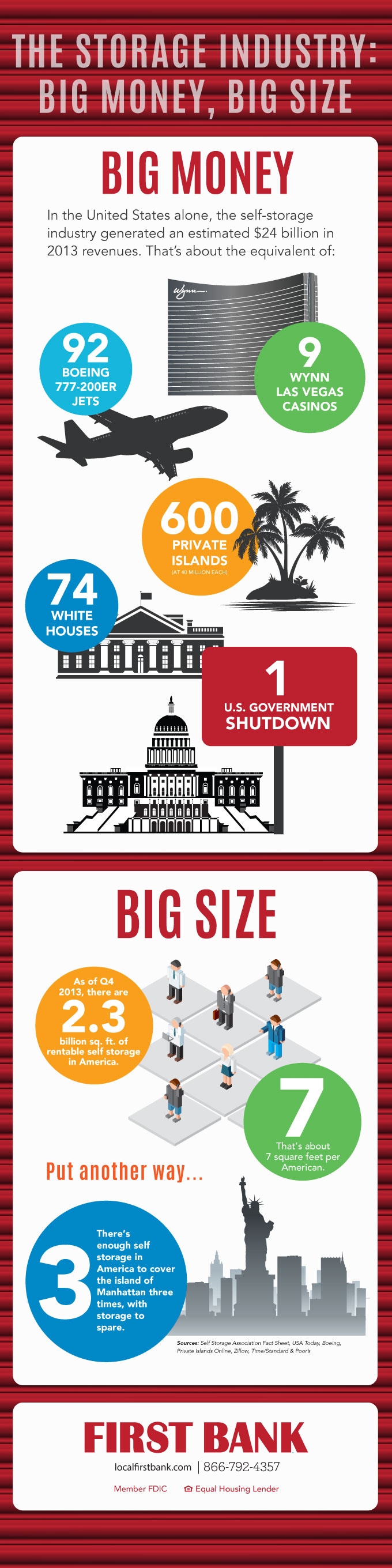
Self-storage industry infographic

Ready to talk to an expert?

Share:

You may be interested in...

Image for tile. When Does an ACH Payment Need to Say “PAYROLL”? What is the Nacha PAYROLL rule? Nacha imposed this new rule in March 2026 to increase fraud prevention and decrease payment confusion. The word “PAYROLL” is now required in the Company Entry Description only when all of the following are true: The ACH entry uses the PPD SEC code The payment represents wages, salaries, or similar compensation The payment is made to an individual (an employee or consumer) If any one of those things is not true, the “PAYROLL” requirement does not apply. What is the Company Entry Description? The Company Entry Description is a short line of text included in an ACH transaction. It helps the person or business receiving the payment understand what the deposit is for when it shows up on their bank statement. Common examples include: PAYROLL RENT VENDORPAY REIMBURSE Nacha sets rules around this field to promote transparency and reduce fraud. One of those rules now requires a specific description — “PAYROLL” — in a very specific scenario. What is an SEC code? An SEC code (short for Standard Entry Class) is a three‑letter code used in the ACH network to describe what kind of payment is being made and who is being paid. Think of the SEC code as the label that tells banks and payment systems how to process the transaction. It identifies whether a payment is going to an individual or a business — and that distinction matters for compliance. Two of the most common SEC codes are: PPD — used for ACH payments to individuals, such as employee payroll CCD — used for business‑to‑business ACH payments, like vendor or service payments Nacha rules, including Company Entry Description requirements, are often tied to the SEC code. That’s why using the correct SEC code is just as important as the payment description itself. Why SEC codes matter: PPD vs. CCD A lot of the confusion comes from mixing up two common ACH SEC codes. The key question to ask is simple: Who is being paid — an individual or a business? PPD (Prearranged Payment and Deposit) Used for payments to individuals Common for employee payroll and other consumer credits This is the only SEC code where the “PAYROLL” description requirement applies CCD (Corporate Credit or Debit) Used for business-to-business payments Common for vendor payments, service fees, and reimbursements paid to a business entity The “PAYROLL” description requirement does not apply Who is responsible for getting it right? Under Nacha rules, the compliance obligation follows the originator of the PPD credit — the business that is paying the individual. That’s why it’s important to: Use the correct SEC code Apply the “PAYROLL” description only when required Avoid over-labeling business-to-business payments Using the wrong description can create confusion for recipients and raise unnecessary questions during reviews. The bottom line: Not every ACH credit needs to say “PAYROLL.” That requirement applies only to PPD credits paying wages or similar compensation to an individual. Business-to-business ACH payments using CCD entries are not subject to this rule. When you understand the “why” behind the rule, compliance becomes a lot less stressful. And if you’re ever unsure which SEC code or description is right for your ACH payments, your First Bank treasury management team is here to help — with clear answers, not guesswork.   Test your knowledge Select an option Paying employees their wages Paying a payroll service provider or staffing firm Paying a contractor or broker that operates as an LLC or corporation “PAYROLL” is required SEC code: PPD Receiver: Individual employee “PAYROLL” is not required SEC code: CCD Receiver: Business entity “PAYROLL” is not required SEC code: CCDReceiver: Business entity Use the dropdown to see common examples of when PAYROLL is required and not required in the Company Entry Description 4 min read
Image for tile. How to streamline and automate your business Your tools have to grow with you It’s payroll day again. Miguel stares at the screen, hesitating to approve the final batch of payments. Everything looks right — it usually is — but with two new offices for his construction services company opening soon, crews in the field, a network of suppliers, and dozens of large transactions happening every day, he can’t afford to make any mistakes. This moment might look familiar. Going from a new small business to an established one is like going from a one-lane road to a four-lane highway: More traffic, happening faster. How is one person supposed to keep up? The truth is: Manual oversight doesn’t scale Miguel’s dilemma isn’t an uncommon one. Owners of established businesses often find themselves losing hours of valuable time by doing everything themselves. That approach made perfect sense when there were 15 transactions a day — it’s harder with 150. That’s why owners like Miguel need to stop investing more of their own time and start investing in a toolbox that helps streamline, automate, and protect what they’ve built. Even successful businesses often struggle with: High transaction volumes across multiple accounts Manual payment approvals eating time or causing delays Increased exposure to fraud and unauthorized transactions A lack of visibility into real-time cashflow Don’t waste your most valuable resource If you own an established business and you’re still spending time on payroll runs, ACH batches, wire transfers, vendor payments, and deposits, then you’re wasting your most valuable resource. Your time. Luckily, there’s a simple solution: Treasury Services. Treasury Services aren’t a single product. They’re a full suite of business tools specifically designed to help established businesses operate smoothly and safely. Not only do you get your time back — time you could spend on family, strategy, or simply snoozing your 5 a.m. alarm — but you actually reduce the risk of costly errors. What are Treasury Services? Remote Deposit Capture For businesses handling high volumes of checks, this tool lets you make deposits quickly and easily — without making daily trips to your local bank. Electronic payments Send and receive funds electronically to keep business flowing smoothly and reduce your reliance on slower, manual methods. Corporate banking services Unlock the full power of digital banking with tools to assign permissions, grant approval rights, provide control to select employees, and schedule specialized reports in advance. Credit card processing Streamline and simplify card payments with customizable reporting, automatic batching, virtual terminals, mobile processing, and more. Positive Pay Add custom safeguards to your transactions, keeping trustworthy payments flowing while guarding against unauthorized activity. Lockbox services Make it easier to receive payments by mail and turn your accounts receivable into usable cash quickly, cutting labor costs and improving efficiency. Start building better systems today When treasury services are done right, the impact is immediate. Fewer bottlenecks, clarity on cashflow, and less time spent chasing paperwork. If your business has gotten more and more complex over time, but your tools haven’t kept up, it may be time to think about sitting down with a local banker to discuss your options — because we believe that great solutions start with conversations, not applications. 3 min read
First Bank logo
Privacy Overview

This website uses cookies so that we can provide you with the best user experience possible. Cookie information is stored in your browser and performs functions such as recognizing you when you return to our website and helping our team to understand which sections of the website are the most popular and useful.