



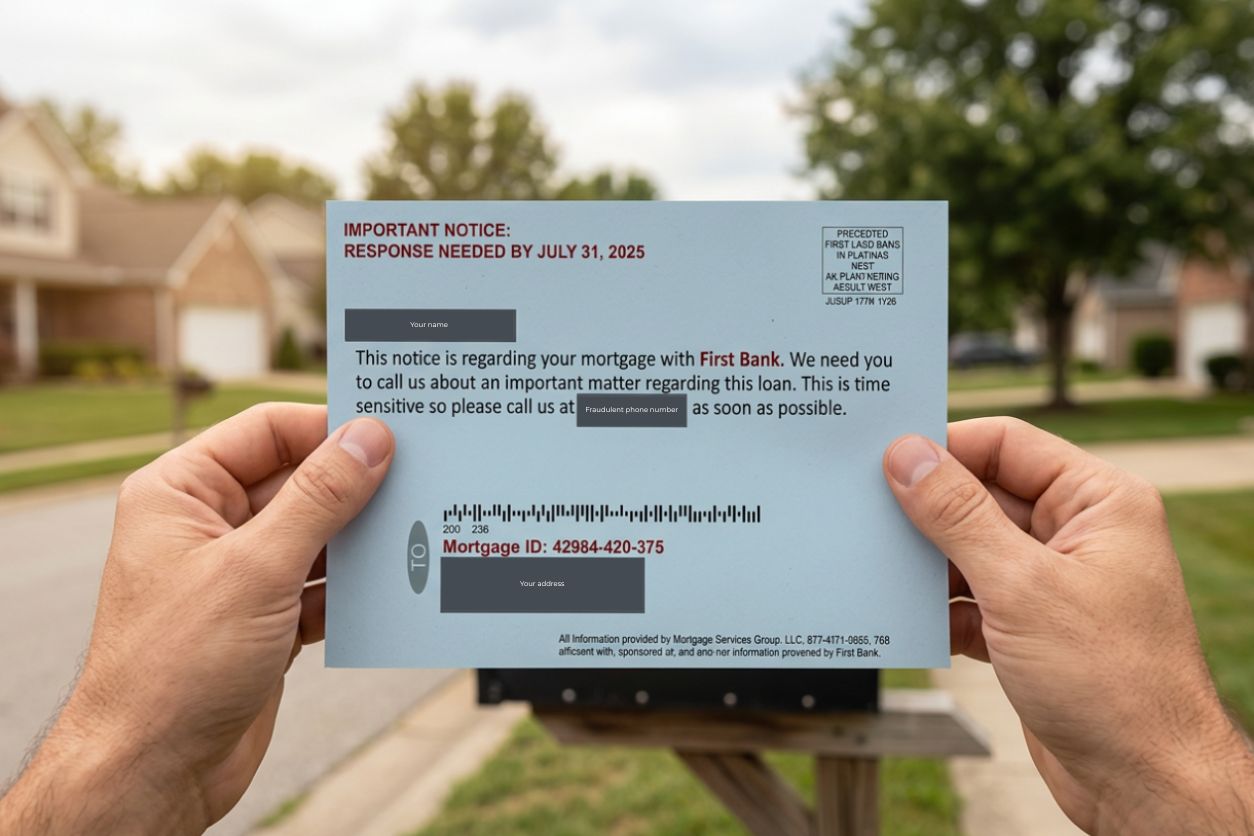
Received a Mortgage Postcard in the Mail? Here’s What to Know
What do these postcards look like? While designs may vary, recent postcards reported by customers have included: A reference to a mortgage with First Bank Language suggesting an urgent response is needed A phone number to call regarding a loan matter A “Mortgage ID” or similar reference number Fine-print disclosures indicating the sender is not affiliated with First Bank Because the postcards mention First Bank and a mortgage loan, some recipients may mistakenly believe the communication came from the bank. How did the sender get my information? Mortgage information, including the existence of a mortgage and the lender’s name, is available through public land records. First Bank does not sell customer mortgage information to third parties for these mailings. In many cases, companies use publicly available property and mortgage records to identify homeowners and send marketing solicitations. Is this mailing from First Bank? No. First Bank does not use unaffiliated third-party companies to send mortgage postcards requesting that customers call unfamiliar phone numbers regarding urgent loan matters. If First Bank needs to contact you about your mortgage, communications will come through established First Bank channels. Should I call the number on the postcard? Customers should exercise caution before contacting unfamiliar companies that request personal or financial information. Before sharing any information, carefully review the mailing and verify the sender. If you are uncertain whether a communication is legitimate, contact First Bank directly using the phone number listed on our website, your mortgage statement, or other official bank communications. What should I do if I receive one of these postcards? If you receive a mortgage-related postcard that appears to reference First Bank: Review the mailing carefully, including any fine-print disclosures. Do not provide personal, account, or financial information to an unfamiliar party. Contact First Bank directly if you have questions about your mortgage or the legitimacy of a communication. Dispose of the postcard if you determine it is an unsolicited marketing piece. How can I verify a communication from First Bank? If you ever receive a phone call, email, text message, or mail piece that appears suspicious, contact First Bank directly using a trusted phone number or contact method before responding. Protecting our customers’ information remains a top priority, and we encourage customers to remain vigilant when receiving unexpected communications related to their financial accounts. Did you receive a suspicious mortgage postcard? Before calling any number listed on the mailing, contact First Bank directly using the customer support phone number on our official website to verify the communication. First Bank Customer Support Telephone: 1-866-792-4357 Hours: Mon – Fri: 7am – 8pm Saturday: 9am – 4pm Sunday: Closed
3 min read

Manage ACH Risk and Protect Your Business
Verify changes before acting Verify any changes to transfer details before taking action. If account information, transfer instructions, or contact details change, confirm them using a known and trusted contact method. Do not rely only on incoming requests. Example: A vendor sends updated banking information by email. Before making the change, the team confirms the details using an existing phone number on file. This prevents funds from being sent to the wrong account. Pause and confirm unusual requests Pause when a request does not match your normal process. Unexpected urgency, changes in tone, or requests outside standard workflows can signal risk. Confirm the request before proceeding. Example: A transfer is requested outside the usual schedule with urgent timing. The team pauses, confirms the request using a trusted contact, and follows the approval process before proceeding. Maintain consistent controls Apply your approval and control process every time. Clear roles, separation of duties, and required approvals protect your organization from both internal and external risk. Consistency is what makes these controls effective. Example: A transfer request is entered correctly but still requires approval before release. The review step confirms details and reinforces the process without exception. Monitor activity for unexpected transactions Review ACH activity for anything that does not match expectations. Unexpected debits, unfamiliar originators, or unusual patterns should be investigated quickly. Early awareness reduces potential impact. Example: An unfamiliar debit appears in the account. The team reviews the activity, confirms it was not authorized, and takes action immediately to address the issue. Stay aligned with ACH requirements Stay current with ACH rules and requirements. NACHA rules define how the ACH network operates. Keeping up with updates helps you maintain compliance and reduce avoidable risk. When something does not look right If something does not match your usual process, pause before acting. Confirm details using a known contact method and follow your established approval steps. Avoid making changes or releasing transfers until the situation is clearly verified. If needed, involve your Treasury Services team to review the activity and provide guidance before proceeding. Completing the ACH lifecycle By this stage, your organization has: Established a repeatable setup process in Stage 1 Submitted transfers accurately and consistently in Stage 2 Reviewed activity and resolved issues in Stage 3 Implemented ongoing controls and monitoring in Stage 4 Together, these four stages create a complete ACH management framework. The goal is not simply to process transfers. The goal is to build a reliable process that supports compliance, reduces risk, and helps your business operate with confidence. Frequently Asked Questions What is ACH risk management? ACH risk management is the ongoing process of verifying changes, applying controls, and monitoring activity to protect your business. What should I do if something looks unusual? Pause the process, confirm the request using a known contact, and follow your approval steps before proceeding. Why is verification important? Verification helps prevent fraud by confirming that changes and requests are legitimate. How do controls reduce risk? Consistent approvals and role separation reduce errors and prevent unauthorized activity. Why is ongoing monitoring necessary? Monitoring helps identify unexpected transactions early so issues can be addressed quickly. Additional Resources Treasury Services Guided Tutorials Treasury Services Hub ACH Best Practices When to Contact Treasury Services Contact your Treasury Services team if you experience: Repeated ACH returns Suspected fraud or unauthorized activity Questions about ACH authorizations Changes to your ACH workflows Questions about ACH rules and requirements Treasury Services can help you evaluate potential issues, review processes, and identify resources that support safe and efficient ACH operations. Final takeaway Strong ACH operations are built through consistent processes, not individual transfers. Organizations that consistently verify information, follow approval procedures, monitor activity, and manage risk over time are better positioned to reduce errors, respond to issues quickly, and maintain strong ACH practices. As your ACH activity grows, return to these four stages regularly. They provide a practical framework for maintaining accuracy, strengthening controls, and protecting your business. Need support or want to review your process? Contact the First Bank Treasury Support Team Fill out this form and we will reach out to you directly to schedule a time to review your ACH processes. Additional Datum (leave alone) Tell us your name First Name Last Name How can we contact you? Email Zip Code Phone Business Name What are you looking for? Your interests 0/300
4 min read

Monitor ACH Activity and Manage Follow-Up
Review ACH Activity Regularly Review ACH activity on a consistent schedule. Check for completed transactions, returned transactions, Notices of Change (NOCs), and notifications. You can also set up transaction alerts and regularly review your Activity Center to stay informed about ACH activity that may require attention. Consistent monitoring helps you identify issues early and take corrective action before they become recurring problems. First Bank Guided Tutorial: Reviewing ACH Notices & Returns This guided tutorial shows how to manage ACH notices and returns in your First Bank online banking dashboard. Identify and Address Returns Returns should be reviewed and addressed immediately. Review the return code, determine the cause, and take the appropriate corrective action before initiating another transaction. Repeated returns for the same issue can create operational risk, increase rework, and may indicate weaknesses in existing processes. Use your online banking system to review return details and determine what action to take next. The ACH Notices & Returns tutorial shows where to locate this information. Example: An ACH transaction is returned because funds were not available at the time of processing. The return appears in the ACH Notices & Returns screen. The issue is reviewed, the customer is contacted, and the next transaction is scheduled after the account is funded. Review and Act on Notices of Change (NOCs) A Notice of Change (NOC) informs you that account information associated with a transaction has changed and should be updated. Guided tutorial NOCs require action. Review the notice promptly, update your records as instructed, and apply the correction before submitting future transactions. Ignoring NOCs can lead to repeated exceptions, unnecessary returns, and compliance concerns. Example: An NOC indicates that a routing number has changed. The updated information is verified, internal records are corrected, and future transactions use the revised routing number. Resolve Issues and Document Outcomes Resolve transaction issues and document outcomes. Record the cause of the issue, the action taken, and the final resolution. Keeping this information organized allows your team to respond faster when similar situations arise. Example: A return shows that account information is no longer valid. The issue is documented, updated account information is requested, and account update steps are reviewed before the next transaction is initiated. Maintain Records for Compliance Maintain authorization and transaction records. Keep records organized and accessible to support reviews, audits, and internal controls. Authorization records should be retained for at least two years. Document how returns and NOCs were resolved and when record updates were made. Maintaining complete records supports compliance and demonstrates that required corrections were addressed. Example: A recipient questions a prior transaction months later. Because the authorization record and related transaction history are retained and easy to access, the team can review the details and respond with confidence. Use Insights to Improve Your Process Use past returns, NOCs, and ACH issues to refine how transactions are prepared and executed. Review patterns in exceptions and adjust procedures, controls, account maintenance practices, or communication steps to reduce future issues. Recurring returns or repeated NOCs often signal a process problem that should be corrected rather than worked around. Final Takeaway Monitoring is not just about reviewing activity. It is about taking action. Review ACH activity regularly, address returns promptly, act on NOCs when received, and apply what you learn to strengthen future transactions. Consistent follow-up helps keep ACH operations reliable, compliant, and efficient as activity grows. Additional Resources How to Manage ACH Notices & Returns Treasury Services Guided Tutorials Treasury Services Hub ACH Best Practices Frequently Asked Questions What happens after I send an ACH transaction? After initiating an ACH transaction, continue monitoring activity, review any returns, Notices of Change (NOCs), or other notices, and resolve issues as they appear. What is an ACH return? An ACH return is a notification that a transaction could not be completed and requires follow-up. What is a Notice of Change (NOC)? A Notice of Change (NOC) notifies you that account information should be updated before future ACH transactions are submitted. Why should I review ACH activity? Reviewing activity allows you to identify issues early, correct problems promptly, and reduce repeat exceptions. How long should authorization records be retained? Authorization records should be retained for at least two years. What should I document after an issue occurs? Document the transaction, what happened, the corrective action taken, and how the issue was resolved. How does monitoring improve future ACH activity? Monitoring highlights patterns that allow you to strengthen processes, reduce future issues, and improve compliance. Next Step Stage 4: Manage ACH Risk and Protect Your Business Need support or want to review your process? If you need help reviewing activity, understanding returns, or improving your process, your Treasury Services team can walk through it with you and provide practical guidance. Contact the First Bank Treasury Support Team Fill out this form and we will reach out to you directly to schedule a time to review your ACH processes. Additional Datum (leave alone) Tell us your name First Name Last Name How can we contact you? Email Zip Code Phone Business Name What are you looking for? Your interests 0/300
5 min read
Online Money Hacks – First Bank
If you are active on social media, you’ve probably tried a “life hack” at some point. Life hacks are little things you can do to make your life easier. For example, tying a small piece of bright colored fabric to your luggage makes it easier to tell which bag at the airport. Life hacks are great, but do you know what’s even better? Money hacks! Money hacks not only make your life easier, they help you save your hard earned cash. Money Hacks Worth Trying Money hacks can be anything from saving your spare change in a piggy bank to skipping your morning Starbucks run and making coffee at home. Small money hacks will help you save a little bit of money, but if you’re looking to save in a big way, try these money hacks from Forbes and from your very own First Bank. Borrow against your home’s equity. This money hack is specifically for homeowners, but it’s useful to know if you are ever planning on buying a home. If you find yourself needing a personal loan for a large amount of money, it might be better to borrow money against your home’s equity. Since you already have been approved for a mortgage the loan application process will typically be easier. Another benefit is that interest payments on home equity lines of credit are typically tax-deductible, unlike interest paid on personal loans. Consult your tax advisor for details on the deductibility of interest. Pay insurance premiums once a year. You’re probably currently making monthly payments for policies like life insurance and auto insurance, but it isn’t required that you make your payments that way. You can opt to pay your insurance policy in one lump sum, which can save you money in the long run. Paying by the month may be convenient, but insurance companies typically charge a courtesy fee. Fun Tips to Save More Money Try a service contract. Instead of shelling out hundreds of dollars for a car or home repair, offset the costs by considering monthly payments for an auto warranty or home protection plan. Stay cool. Preserve the longevity of your batteries, hosiery, and candles by storing them in your freezer. Raise a glass to
3 min read
Highest Yield Savings Account
A high yield savings account is a great way to grow your money over the long term. First Bank has several options for those searching for the highest yield savings account available to them. Read on to learn more about the best ways to save your money for the future. Save Your Hard-Earned Cash With A First Bank High Yield Savings Account First Bank offers high yield savings accounts that will help you save your hard earned cash, so you can spend it however you want to in the future. Our Money Market Account gives you access to your savings, while you earn interest at a higher rate than most other savings account options. Money Market Account benefits include: 6 free withdrawals per month* Interest-earning account access $1,000 minimum required to open account Free online and mobile banking* Easy money transfers Free eStatements or paper statements A certificate of deposit is also a good option for anyone looking for the highest yield savings account possible. If you do not need immediate access to your funds, a CD usually offers higher interest rates than savings and money market accounts. First Bank’s CDs are safe, FDIC-insured investments, and typically offer fixed interest rates. Learn More About High Yield Savings Accounts Today To learn more about the highest yield savings accounts in North Carolina and South Carolina, visit our website or stop by your local First Bank branch. ——— Sources: Investopedia: http://www.investopedia.com/articles/pf/09/high-yield-savings-account.asp *Withdrawal fee of $15 each after the first six free during the month. Federal regulations limit withdrawals of preauthorized transfers to six (6) per month, including checks, drafts, online transfers, telephone transfers and debit card purchases. You may conduct an unlimited number of withdrawals at the ATM, in person at a branch, or by mail when the check is mailed to you. *While First Bank does not charge for mobile banking, your mobile carrier’s message and data rates may apply.
2 min read
First Bank Card
With a First Bank card, you can feel confident that you are obtaining a bank card that is secure and convenient. Are you one of the 194 million people who already have a debit card? Get the most out of your card today with First Bank. Many Benefits of a First Bank Debit Card When you open a First Bank checking account, you can receive our First Bank MasterCard® personal debit card. It is accepted at millions of locations worldwide and thousands of ATMs across the country, and comes with free online banking, making it easy to view and track your purchases whenever you want. In addition, you get: Credit card access benefits — Enjoy 24-hour access to your account and the ability to manage your account online, download credit statements, and pay your bill online**. Security Benefits — Enjoy security benefits such as: Zero liability: Pay only for authorized purchases. MasterCard SecureCode: Enjoy protection from fraudulent use of your card information online. ID theft alerts: Reduce your risk of identity theft with this service that constantly monitors websites and chatrooms. You’ll be alerted immediately should we detect any evidence of your information being traded or sold online. Convenience Benefits — Enjoy convenience benefits such as: MasterCard Global Service®: This benefit provides you with 24-hour service for lost or stolen cards, account information, emergency cash advances, and more 365 days a year. Mobile Wallet: A quick and easy way to use your First Bank debit card on the go with most smartphones. Shopping Benefits — Enjoy shopping benefits like: Price protection: If you find an item that was recently purchased with your eligible MasterCard® for a lower price, you may be reimbursed for the price difference. Extended warranty: Most manufacturer’s warranties are doubled up to one year when you pay with your eligible MasterCard®. First Bank has over 100 locations in NC and SC so head to a location near you and open an account today. *Loans subject to credit approval. MasterCard, Debit MasterCard and the MasterCard brand marks are trademarks of MasterCard International Incorporated. **While First Bank does not charge for mobile banking, your mobile carrier’s message and data rates may apply. The First Bank Digital Banking Apps are available for select mobile and tablet devices. There
3 min read


