Back
Scroll to top

Power of Good Spotlight: Diaper Drive for Dare County
Across The Carolinas 3 min read

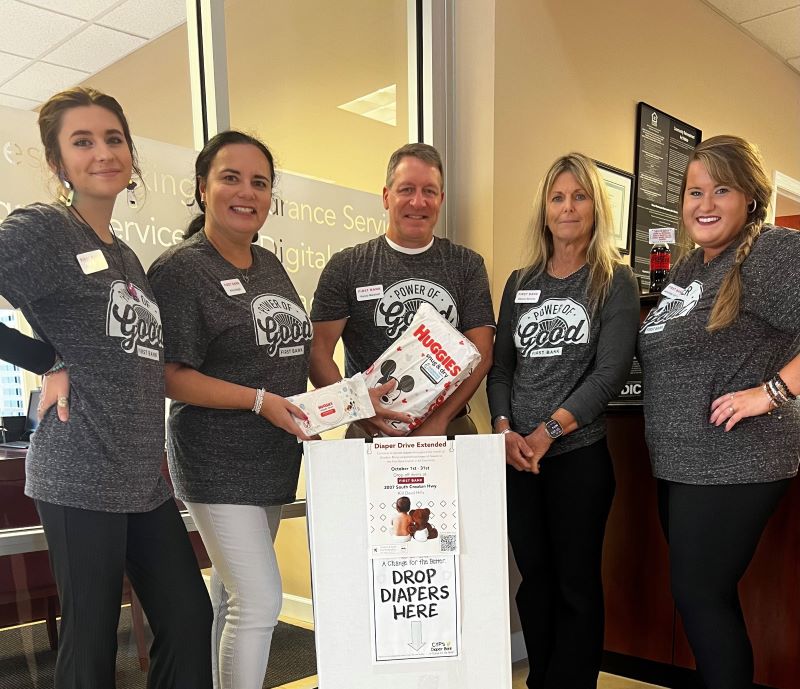
“First Bank is excited to partner with the Children and Youth Partnership for Dare County by providing a location where the community can easily donate unopened packages of diapers.  All sizes are welcomed and needed.  Come inside the branch and drop off your donation, or simply come by our drive-thru.”

Kenny Marshall, SVP, City Executive
First Bank, Kill Devil Hills

Want to get involved?

Contact Us Learn more

Did you know that the average cost to diaper a child is currently $100/month?

Our First Bank team in Kill Devil Hills is hosting a Diaper Drive in partnership with the Children and Youth Partnership for Dare County (CYP). We’re hoping to bring awareness to the rising cost of diapers and the subsequent impact on families with newborns and diaper-aged children.

Because diapers cannot be purchased with food stamps or WIC, families are having to make difficult decisions to account for the additional expense to their budget. In September, the Children and Youth Partnership for Dare County provided diapers to 124 families, the highest number served since launching their Diaper Bank service.


Want to get involved?

  • If you are a Dare County resident, bring unopened packages of diapers to the Kill Devil Hills branch at 2007 South Croatan Hwy. Diapers of all sizes are needed and gladly accepted. You can also support the Children and Youth Partnership for Dare County directly. Learn more here.
  • No matter where you are located, it’s likely there is an organization near you that is accepting diaper donations for local families. Use the National Diaper Bank Network as a starting point to learn more and how to get involved in your community.


What is Diaper Need? CYP provides the following overview:

Diaper need – the lack of a sufficient supply of diapers to keep a baby or child clean, dry, and healthy – is a significant problem in Dare County that has continued to grow as our community continues to feel the effects of COVID and inflation. Right now:

  • Infants/Toddlers require 8-12 diapers a day, costing nearly $100 a month for families. This is only for one child, so families with multiple young children can see that number double or triple.
  • Diapers cannot be purchased with food stamps or WIC. While they are able to be purchased with Temporary Assistance for Needy Families (TANF) cash assistance, less than a quarter of families living below the Federal Poverty Level actually receive TANF. 
  • One in two American families has difficulty affording diapers at all.
  • Most childcare programs require parents to provide disposable diapers in order for their infant/toddler to attend.
  • Nearly 75% of families who reported not being able to provide clean, dry diapers for their child felt that they were not good parents.
  • Lack of adequate clean diapers can lead to severe diaper rash and excessive crying that, when coupled with the stress of living in need, can lead to child abuse.

[Continue reading on the Children and Youth Partnership for Dare County website]
Large image

Thank you to the Children and Youth Partnership of Dare County and all organizations committed to making our communities a better place to live. Visit their website to learn more about their organization:


http://www.darekids.org/


Want to get involved?

Share:

You may be interested in...

Image for tile. Hurricane Helene Recovery: Financial Assistance Options 1. U.S. Small Business Administration (SBA) Disaster Loans The SBA offers a range of disaster loans to individuals, businesses, and nonprofit organizations to cover losses not covered by insurance or FEMA. These loans help cover both personal and business expenses that could have been met had the disaster not occurred. October 15, 2024 Update: The SBA announced that it has exhausted funds for its disaster loan program. Until Congress appropriates additional funds, the SBA is pausing new loan offers. The SBA is encouraging individuals and small businesses to continue to apply for loans given assurances from congressional leaders that additional funding will be provided upon Congress’s return in November. Click here to read the press release. Home Disaster Loans: Available to homeowners and renters to repair or replace damaged real estate and personal property, including vehicles. Business Physical Disaster Loans: These loans are designed for businesses of all sizes to repair or replace damaged property owned by the business, such as real estate, machinery, equipment, and supplies. Private non-profit organizations like charities and churches are also eligible. Economic Injury Disaster Loans (EIDL): These are working capital loans designed to help small businesses, agricultural cooperatives, aquaculture businesses, and private nonprofits meet financial obligations they can’t cover due to the disaster. These loans are meant to support recovery during the disaster recovery period. For more information, visit the SBA Disaster Assistance website or contact them directly. 2. FEMA Disaster Assistance FEMA offers a wide range of financial assistance programs for those impacted by natural disasters. If you have insurance, file a claim immediately, as FEMA cannot cover losses that are already insured. FEMA provides grants for: Temporary housing Home repairs Other disaster-related expenses not covered by insurance You can apply for FEMA assistance online or by calling 800-621-3362. 3. Disaster Unemployment Assistance (DUA) Individuals who have lost their jobs or had their employment interrupted due to Hurricane Helene may be eligible for Disaster Unemployment Assistance (DUA). This program extends unemployment benefits to those who may not be eligible for state unemployment, such as the self-employed or small business owners. To qualify, you must: Live, work, or were scheduled to work in a federally declared disaster area. Have lost employment or had employment interrupted due to the disaster. Have exhausted regular state unemployment benefits. Eligibility is determined weekly, so you must continue to be out of work as a direct result of the disaster to maintain benefits. Visit the Disaster Unemployment Assistance page of the NC Department of Commerce website for more information about this program.  4. Freddie Mac, HUD, and FHA Mortgage Assistance If your home has been affected by Hurricane Helene and you are struggling to make mortgage payments, Freddie Mac, HUD, and the FHA offer mortgage relief options. These include: Forbearance plans to temporarily suspend or reduce your mortgage payments. Loan modifications to make your mortgage more affordable over the long term. Mortgage assistance programs designed specifically for disaster recovery. Contact your mortgage provider to inquire about disaster relief programs available through these organizations. 5. NC Bankers Association Disaster Relief The NC Bankers Association provides resources and guidance for individuals and businesses impacted by disasters. Through their network, they can help you access financial institutions offering relief, including special loan programs and deferral options for existing debts. It’s worth reaching out to your local bank or lender to inquire about specific programs that may be available to you. Visit the Hurricane Helene page of the NC Bankers Association website for a comprehensive list of resources. 6. WNC Strong: Helene Business Recovery Fund – Mountain BizWorks In response to Hurricane Helene, the WNC Strong: Helene Business Recovery Fund, led by Mountain BizWorks, is providing financial relief for businesses across Western North Carolina. This fund is designed to support local businesses that were impacted by the hurricane, offering critical recovery resources, including: Low-interest loans to help businesses rebuild. Emergency financial support to address urgent needs like working capital, repairs, and more. Mountain BizWorks is a community-focused lender that helps small businesses in the region thrive, even in the face of disaster. They are committed to supporting business owners through the recovery process with accessible financing options. Visit their website for more details on how to apply. 7. SBA Microlenders for Business Recovery The SBA also partners with microlenders across the country to provide small loans, typically up to $50,000, to businesses in need of capital. These loans can help cover immediate business needs such as payroll, inventory, and repairs. In the wake of Hurricane Helene, these microlenders are valuable resources for small businesses that may not qualify for traditional financing options. To find an SBA microlender in your area, visit the SBA Microlender List. 8. Western North Carolina Small Business Initiative Appalachian Community Capital has partnered with Community Development Financial Institutions (CDFIs) to provide relief grants to small businesses harmed by Hurricane Helene. The grant program is called the Western North Carolina Small Business Initiative. Small businesses can apply for grants up to $25,000 to cover expenses related to recovery and reopening including repair and replacement of physical damage, environmental cleanup, payment of business-related rents or mortgages, employee retention and hiring, and more. The application window for this grant is from October 30 through November 27, 2024. For more information and to apply, visit their website here. First Bank is Here to Help If you have any questions about these resources, our bankers are more than happy to help you navigate the questions you may have. Recovering from Hurricane Helene is a challenging process, but these resources are designed to provide financial relief when it’s needed most. If you’ve been affected, be proactive in exploring the options available to you, from disaster loans to mortgage forbearance.  While the road to recovery may be long, these programs can ease some of the financial burdens and help you rebuild your life or business. 5 min read
First Bank logo
Privacy Overview

This website uses cookies so that we can provide you with the best user experience possible. Cookie information is stored in your browser and performs functions such as recognizing you when you return to our website and helping our team to understand which sections of the website are the most popular and useful.