Back
Scroll to top

How eStatements help protect you from fraud
Personal Finances 3 min read
eStatements reduce fraud risk by keeping sensitive financial information out of the mail. Learn how switching can help protect your accounts.

Ready to talk to an expert?

Find A Location Get In Touch

Are you leaving an unwanted paper trail?

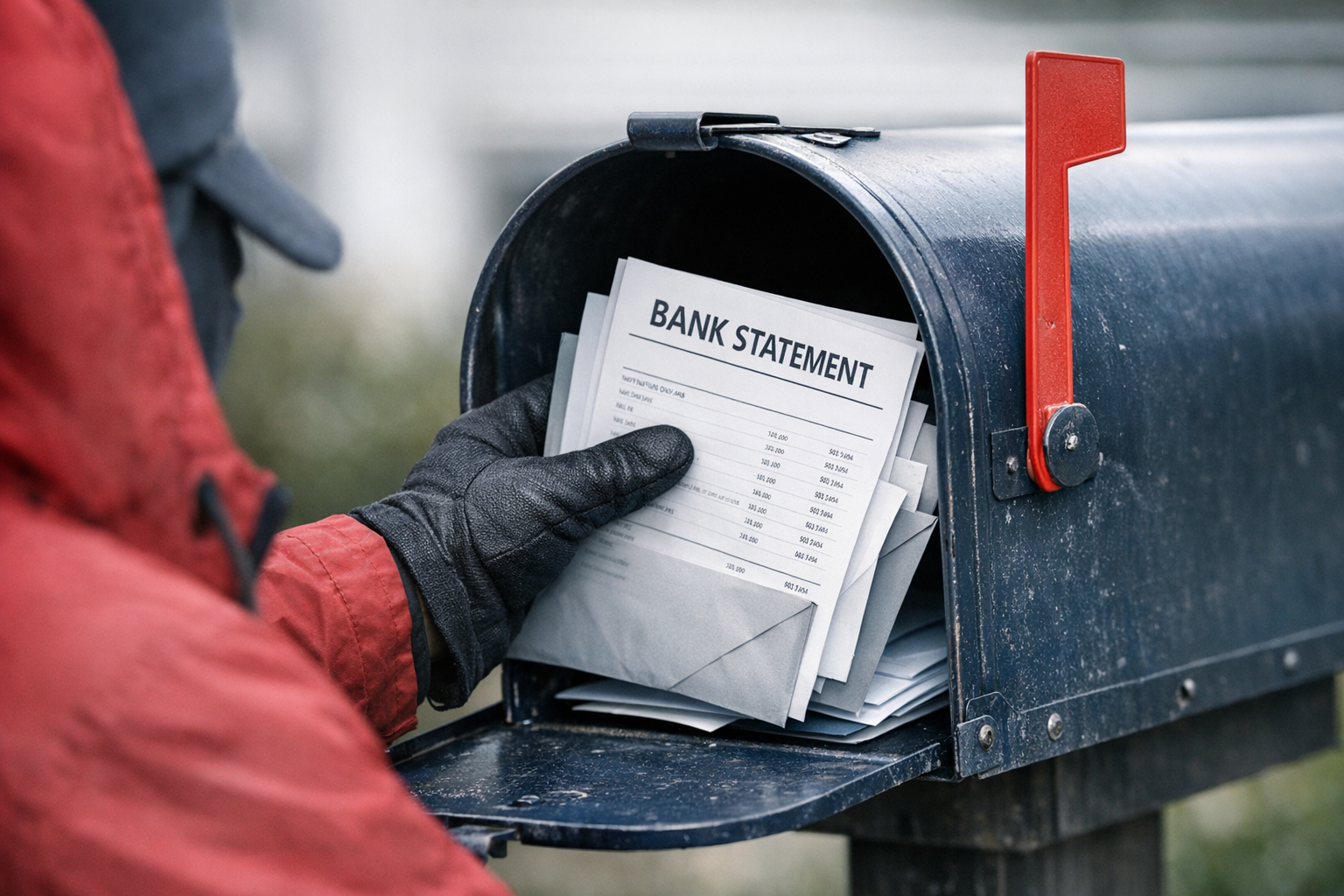
Fraud can come from unexpected places — it can even start right in your mailbox.

When paper bank statements travel through the mail, they’re vulnerable to prying eyes. And with mail theft on the rise, financial documents are a common target for identity thieves.

Choosing eStatements is a simple way to reduce that risk. Not only do they help you protect sensitive information, but they also make it more convenient to see your account activity.

The hidden risks of paper statements

Even after delivery, paper statements can pose a risk. Statements left in a box, misplaced at home, or tossed without shredding can be retrieved and misused.

A typical bank statement includes your name, address, partial account number, and a detailed record of your transactions. That information is essential for managing your money, but it can also be used by a bad actor to impersonate you or misuse your account.

That’s why we encourage all our customers to opt in to eStatements. Your statements are stored securely online rather than traveling through the mail or sitting around the house.

Why eStatements are a safer option

eStatements help remove many of the risks and inconveniences that come with paper mail:

  • No paper mail. eStatements never pass through the postal system, so there’s no chance of them being misplaced, intercepted, or pulled out of the trash.
  • Secure access. First Bank uses encryption and authentication measures to protect our online banking platform, adding layers of security that paper simply can’t provide.
  • Faster visibility. eStatements are typically available sooner than mailed statements, giving you the chance to review activity quickly and spot anything that doesn’t look right.

As a best practice, the FDIC encourages consumers to regularly monitor their accounts and take advantage of digital banking tools. eStatements make both habits easier.

A small change that makes a meaningful difference

Switching to eStatements isn’t a guarantee of fraud prevention, but it will lower your risk. With a strong password, account alerts, and a little vigilance, you can stay one step ahead.

It only takes a few clicks to get started. Go to our online banking platform and select eStatements from the menu to opt in. Or if you’d rather talk it through, our Customer Support team is always happy to help.

Remember: While eStatements help reduce certain risks, customers should continue to monitor their accounts regularly and report any suspicious activity right away.

Ready to talk to an expert?

Share:

You may be interested in...

Banks in North Carolina Did you know there are more than 100 First Bank locations in North Carolina? It’s true. You can find us in over 60 cities, mountains to coast. Did you know we’re one of the oldest banks in North Carolina? Yup, our roots date back to 1935 in the town of Troy, North Carolina. Did you know we’re a full-service bank? We sure are. We have checking and savings accounts for personal and business use, credit cards, loans of all types, business merchant services, insurance, mortgages, wealth management, and more. Of all the banks in North Carolina, we are confident you won’t find the personal level of customer service, complete selection of services, and convenient array of locations that you’ll find with First Bank. We take advantage of technology to bring our customers the added convenience of online, mobile, and digital banking services to enhance the First Bank experience.* We even connect with our customers through our Facebook, Twitter, Instagram and YouTube channels! Not Like the Other Banks in North Carolina You’re likely to find three types of banks in North Carolina. First, you’ll find the large national banks. They don’t have the capacity to get to personally know their customers and specifically cater services to those needs. The second are smaller local banks that aren’t equipped with the selection of services that bigger banks can offer. The third type of bank in North Carolina is First Bank, which offers the best of both worlds. We are small enough to provide the friendly customer service and personal care of a local bank and big enough to provide all the services and products of the bigger banks. So get to know First Bank, and we’ll be pleased to get to know you right back. 2 min read
Image for tile. Learn How Much You Should Be Saving Each Year Wondering how much you should be saving each year? Many specialists believe in the 50/20/30 budget: 50% is spent on necessary expenses (e.g. credit card bills, rent), 20% of your income is put into savings, and 30% is left for your luxury expenses (e.g. a new TV, restaurants). By following this rule, you can comfortably begin saving for retirement or an emergency fund while having enough to make ends meet. How Much Should I Be Saving? While there’s no one-size-fits-all answer to how much you should have saved, there are some goals you should focus on during your 20s, 30s, 40s and beyond. Here’s a recommended savings road map to guide you at any age: 20s: Focus on building your credit, paying off loans and save something each month. Even if you’re not able to save quite up to 20% of your income, try starting at 10%. 30s: Allocate more money into savings, especially if you’re thinking about starting a family, buying a new home, or taking on a few home repairs soon. You should be putting at least 15% of your income into savings, if not more. Additionally, you should continue to pay off all non-mortgage debt. 40s: Get your credit card debt under control and up the amount you’re putting away into savings again. By this time, you should aim to have more than your current salary put away in savings. 50s: Max out your retirement contributions and pay off your mortgage. You should aim to have as much of your income and investments working towards your retirement goals as possible. Ideally, you have more than two times your current salary set aside in savings. Start Saving for Your Future Today Changing the way you spend can feel overwhelming at first and requires discipline. However, in time, you’ll get used to what is necessary and how much of your luxury expenses can be cut or limited. Take charge of your finances and invest in your future. For more questions about how much you should be saving each year, or how to get started, contact your local First Bank branch today!  ——— Sources: Experian: https://www.experian.com/blogs/ask-experian/how-much-should-you-save-each-month/ Huffington Post: http://www.huffingtonpost.com/simple-thrifty-living/in-your-20s-40s-60s-the-b_b_5686551.html Money Under 30: http://www.moneyunder30.com/how-much-do-you-need-to-have-saved-for-retirement 2 min read
What Are 20-Year Mortgage Rates? There are various factors to consider when purchasing a home, including how to finance it. Some consumers may opt for a mortgage with a shorter term while others find it beneficial to extend the mortgage. It may be best to look for a 20-year mortgage for a lower price without putting yourself in debt until retirement. First, let us help you answer the question, “What are 20-year mortgage rates?” What are 20-year Mortgage Rates? 20-year mortgage rates are an alternative to 15 and 30-year mortgage rates, the most common types of mortgage loans. 15, 20, and 30-year mortgages are usually offered as fixed-rate mortgages, meaning the interest rate you pay never changes. A 20-year fixed mortgage rate typically allows you to build equity faster and pay off your home in less time than other longer-term mortgage loans. They also typically have lower interest rates than other mortgage options because the term of the loan is shorter. Benefits of a Fixed-Rate Mortgage First Bank offers conventional fixed-rate mortgages, available in terms of 15, 20, and 30 years. There are many benefits to a First Bank fixed-rate mortgage, including: Predictable monthly P&I payments Protection from rising interest rates for the life of the loan Sound investment for long-term home owners What is an Adjustable Rate Mortgage? First Bank also offers adjustable rate mortgages, or ARMs. ARMs have interest rates that change periodically. When the rate changes, your monthly payment will either increase or decrease depending on whether the rates rise or fall. First Bank’s ARMs are available for 30-year amortization schedules, with initial periods of 3, 5, or 7 years. Contact First Bank Today Whether you’re buying a home or interested in refinancing, First Bank has a loan option for you. If you are still have questions about mortgage rates or conventional loans, contact the First Bank Mortgage Help Center, or visit a First Bank branch near you. 2 min read
First Bank logo
Privacy Overview

This website uses cookies so that we can provide you with the best user experience possible. Cookie information is stored in your browser and performs functions such as recognizing you when you return to our website and helping our team to understand which sections of the website are the most popular and useful.