Back
Scroll to top

Can You Spot a Scam?
Personal Finances 5 min read
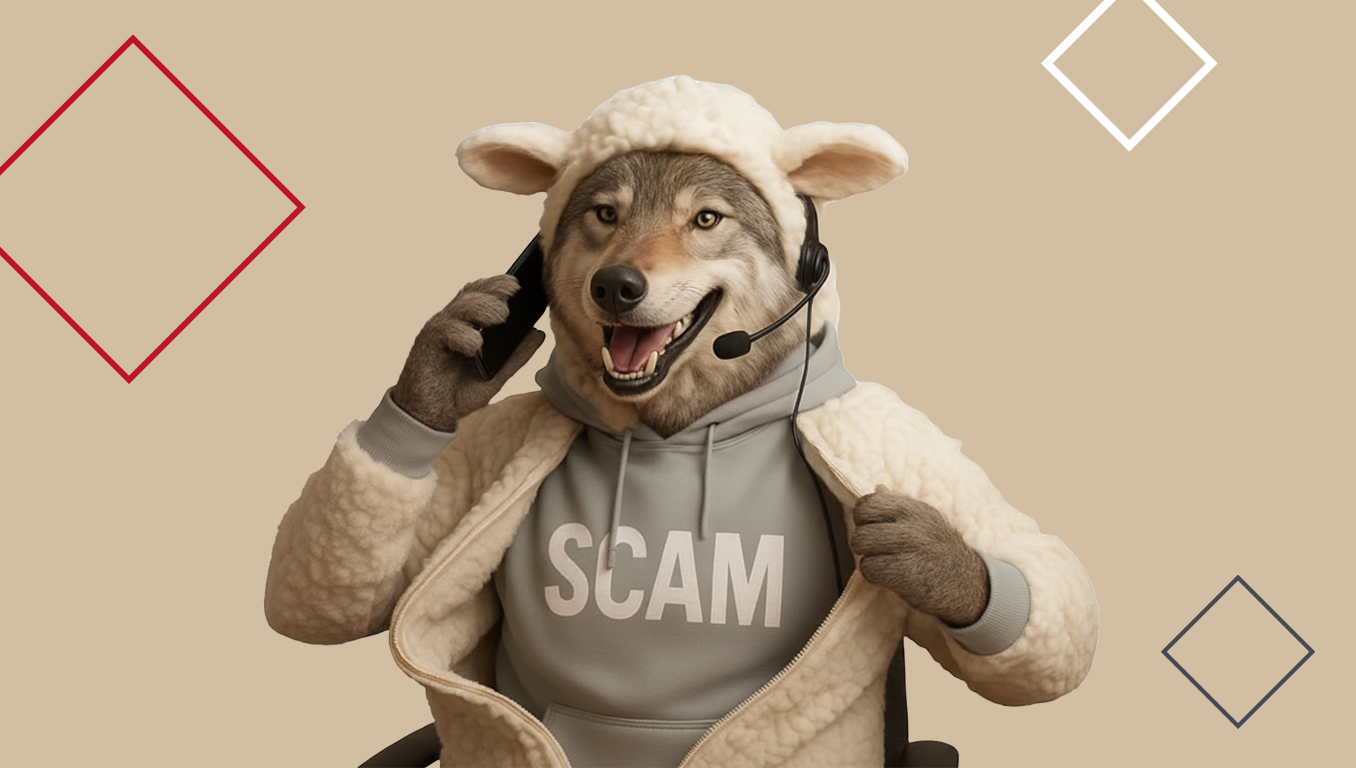
a wolf in sheep's clothing works at a scam

Want to test your knowledge about financial fraud and find a useful checklist that will help you protect your account from common scams? You’ve come to the right place.

Can you spot a scam?

Most people are confident that they can tell the difference between fact and fiction, but the truth is that it isn’t always easy to fend off fraud. Want to test your knowledge? Click through the scenario below and think about whether it’s a helpful notice from your bank or if it might be a scam. Read on to find out the answer!

Is this your bank… or is it fraud?

1) Your phone rings.

Caller ID shows the number as your local bank.

2) You pick up the phone.

The caller addresses you by name and seems to be familiar with your bank account number, address, and transaction history.

3) They warn you of possible fraud on your account.

The caller asks if you’re familiar with several recent transactions and reassures you that they’ll help you protect your account.

4) They ask you to confirm your identity.

Before the caller can help, they ask you to verify your identity by sharing the last 4 digits of your debit card or a one-time passcode.

So… what do you think?

Is the person on the phone a cunning fraudster or an honest banker?

How to fight fraud and find red flags

In the scenario above, the call is probably a scam. But the caller’s familiarity with your personal details may cause you to drop your guard long enough for them to retrieve your Secure Access Code (SAC) or a one-time code texted to your phone. They may use that code to change the password of your bank account, letting them in and locking you out, or to add your card to their digital wallet, which lets them use your card to make unauthorized purchases.
It’s important to know that First Bank will never ask you for information like a one-time passcode if we’re the ones reaching out to you. Here are some other common red flags to look out for…

Keep an eye out for these common tricks:

  • Unexpected calls or messages, even if they look official. If you get any kind of communication claiming to be from First Bank — or another trusted source — stop and think about whether it might be fraud before responding. Caller ID and emails are easily faked.
  • Pressure to act fast. Scammers often create a false sense of urgency to keep you from calmly thinking things through. They may claim that your account is at risk or that you owe money on a debt. Remember that legitimate businesses are unlikely to rush you.
  • Requests for sensitive information. While we may send you a one-time code to verify your identity after you call us, remember that a First Bank employee will never reach out to you and then ask for your one-time passcode, PIN, or password.
  • `

  • Being told not to contact your bank. Fraudsters may say that your local branch is under investigation for misconduct or that your usual banker isn’t available. Don’t be afraid to hang up and call a trusted number to confirm whether there’s really a problem.
  • Unusual payment methods. If you’re ever asked to pay with a gift card, wire money to a specific account, or use a payment app, stop and call your local bank. Cryptocurrency and large cash withdrawals are also common. Scammers prefer payments like these because they’re hard to trace, and it’s often impossible to recover stolen funds.

Learn more about financial fraud

If you suspect a scam, here’s what to do.
Need to make a quick decision in the heat of the moment? Remember these important fraud protection tips:
✅ Always double-check the details
✅ Stop and think through the situation
✅ Keep your private information secure
✅ Talk to someone you trust — like your local bank
✅ Only make payments through familiar platforms
✅ Don’t be afraid to trust your intuition
And remember — fraudsters don’t only go after regular folks. They target business accountholders, too. Keep an eye out for invoices from unfamiliar vendors, urgent payment requests, unusual payroll changes, and spoofed emails. Some business accounts, like First Bank’s Business Elite, offer built-in treasury tools and fraud protection.
Column image.

Have questions? Talk to our team.

Want to learn more about common fraud tactics? Think you or someone you know may have been targeted? We’re happy to help. You can always stop by your local First Bank branch or call our customer support team at +1 (866) 792-435.

You can also share examples of attempted fraud with your branch team or send them directly to fraud@localfirstbank.com so that our team can help protect others from becoming victims.

Ready to talk to an expert?

Share:

You may be interested in...

HSA Rules and Regulations You Should Know If you have a high-deductible health insurance plan, a Health Savings Account (HSA) can help you save for future medical expenses. Health Savings Accounts were established by the federal government as part of the Medicare Prescription Drug, Improvement, and Modernization Act. Like any federal program, HSAs have rules you must follow in order to qualify, make contributions to your account, and withdraw your funds. HSA Rules and Regulations Rules for Qualifying According to federal guidelines, in order to qualify for an HSA, you: Must be covered under a high deductible health plan (HDHP) on the first day of the month Have no other health coverage (some exceptions apply) Are not enrolled in Medicare Cannot be claimed as a dependent on someone else’s prior year tax return Rules for Making Contributions Each year the IRS determines the amount that you, your employer, or anyone else can contribute to your HSA. Determine current contribution limits on the IRS website. Rules for Using Your Savings You can use the money in your HSA account for qualified medical expenses determined by the IRS. Typically, HSAs are used for treatments, prevention and diagnosis of conditions and diseases. HSAs at First Bank* A First Bank Health Savings Account provides you a tax-free distribution from your account any time you need to pay for medical expenses.** First Bank HSAs also come with online banking and bill pay to help you manage your account, and you can access your funds from anywhere with our HSA-specific debit card and checks. Other benefits include: Tax deduction for contributions even if deductions are not itemized Contributions made by employer may be excluded from gross income Contributions accumulate until used Tax free earnings HSA may be transferred or rolled over to another HSA Complete IRS reporting available FDIC insured To learn more about HSA rules and sign up for an account today, visit a First Bank branch near you. *Member FDIC. **Qualified medical expenses, as explained in IRS Pub. 502, include amounts paid for doctors’ fees, prescription medicines, and necessary hospital services not paid for by insurance. Qualified medical expenses may be incurred by you, your spouse, or your dependents. To be eligible for a HSA account, you must you must be 3 min read
Savings Account Interest Rates in North Carolina Whether you’re saving for retirement or starting a college fund, having the right savings account can help you reach your financial goals. With some of the most competitive savings account interest rates in North Carolina, First Bank offers a variety of options to meet your financial needs. Types of Savings Accounts at First Bank When you’re comparing interest rates, it’s important to understand which accounts offer the best rates. At First Bank, we offer six different savings accounts with varying interest rates: Everywhere Savings—For simple savings at a competitive interest rate, this account offers free online and mobile banking, account alerts, and free eStatements. MyFirst Savings—If you’re under 18 and ready to start saving, consider opening a MyFirst Savings account. You only need a $10 deposit to open the account and don’t have to worry about a minimum balance or maintenance fees. Money Market—With higher interest rates and instant access, our money market account allows you to have six free withdrawals per month, free online and mobile banking, free eStatements, and more. CDs—If you don’t need immediate access to funds, this option provides flexible rates and guaranteed rates of return. CDs typically offer higher interest rates than savings and money market accounts, making them a great investment option. IRAs—At First Bank, we offer a variety of IRA options for your long-term retirement plans including traditional, Roth, and SEP IRAs. Talk to one of our banking experts about the different rates you’ll receive if you choose to open up an IRA. Health Savings Accounts (HSA)—For a great way to save on current and future medical expenses, consider opening a health savings account. This account allows you to manage health care spending and earn tax-advantaged savings. Use our Account Comparison Chart to decide which savings account is best for you. Get Competitive Interest Rates at First Bank Interest rates will vary depending on which savings account you choose. Regardless of the type of savings account you open, we want to make sure you’re getting a good rate. Consult with one of our banking experts at your nearest First Bank to compare interest rates. Open a Savings Account Today Visit one of our North Carolina branches and talk to a financial expert about getting 3 min read
First Bank logo
Privacy Overview

This website uses cookies so that we can provide you with the best user experience possible. Cookie information is stored in your browser and performs functions such as recognizing you when you return to our website and helping our team to understand which sections of the website are the most popular and useful.