_FB_2018-Icons-finalized-cleaned-up_new_FB_2018-Icons-finalized-cleaned-up_newGroup 9
Back
Scroll to top

Can You Spot a Scam?
Personal Finances 5 min read
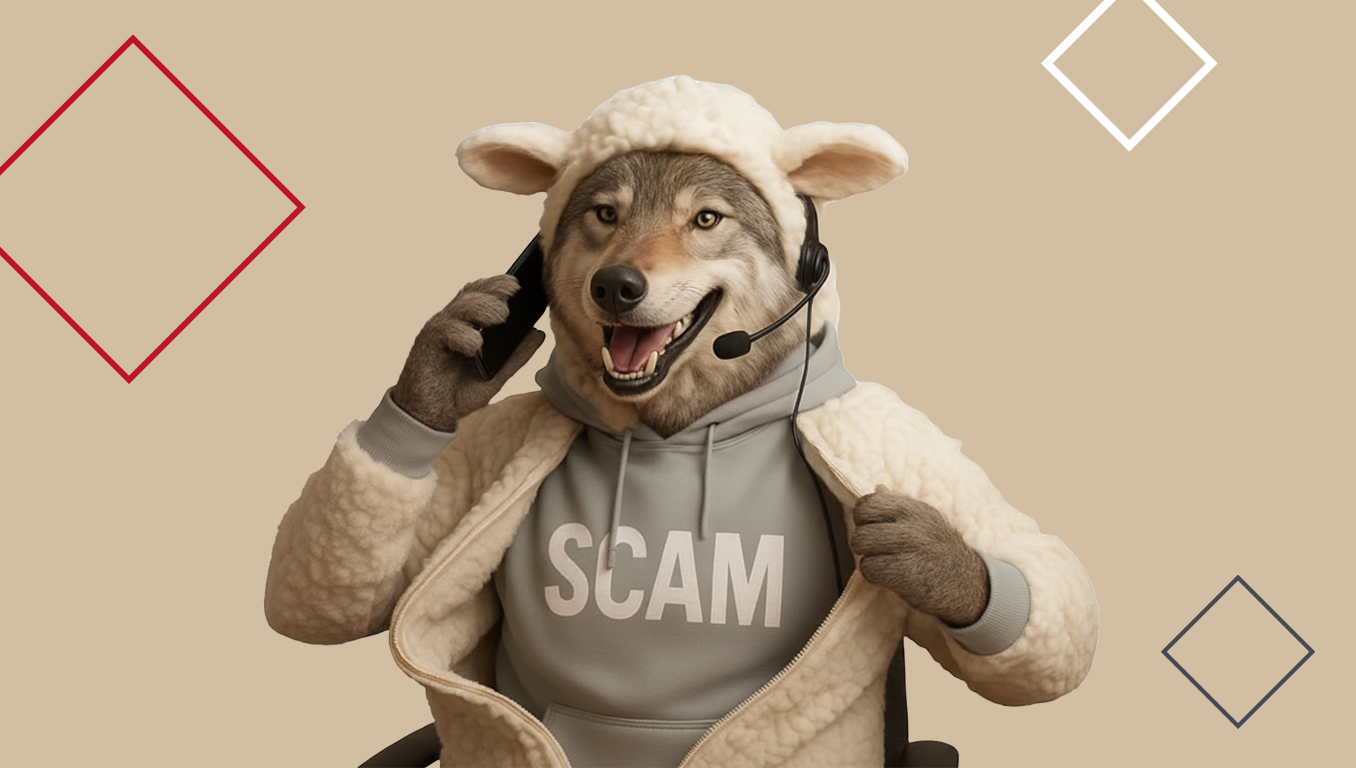
a wolf in sheep's clothing works at a scam

Want to test your knowledge about financial fraud and find a useful checklist that will help you protect your account from common scams? You’ve come to the right place.

Can you spot a scam?

Most people are confident that they can tell the difference between fact and fiction, but the truth is that it isn’t always easy to fend off fraud. Want to test your knowledge? Click through the scenario below and think about whether it’s a helpful notice from your bank or if it might be a scam. Read on to find out the answer!

Is this your bank… or is it fraud?

1) Your phone rings.

Caller ID shows the number as your local bank.

2) You pick up the phone.

The caller addresses you by name and seems to be familiar with your bank account number, address, and transaction history.

3) They warn you of possible fraud on your account.

The caller asks if you’re familiar with several recent transactions and reassures you that they’ll help you protect your account.

4) They ask you to confirm your identity.

Before the caller can help, they ask you to verify your identity by sharing the last 4 digits of your debit card or a one-time passcode.

So… what do you think?

Is the person on the phone a cunning fraudster or an honest banker?

How to fight fraud and find red flags

In the scenario above, the call is probably a scam. But the caller’s familiarity with your personal details may cause you to drop your guard long enough for them to retrieve your Secure Access Code (SAC) or a one-time code texted to your phone. They may use that code to change the password of your bank account, letting them in and locking you out, or to add your card to their digital wallet, which lets them use your card to make unauthorized purchases.
It’s important to know that First Bank will never ask you for information like a one-time passcode if we’re the ones reaching out to you. Here are some other common red flags to look out for…

Keep an eye out for these common tricks:

  • Unexpected calls or messages, even if they look official. If you get any kind of communication claiming to be from First Bank — or another trusted source — stop and think about whether it might be fraud before responding. Caller ID and emails are easily faked.
  • Pressure to act fast. Scammers often create a false sense of urgency to keep you from calmly thinking things through. They may claim that your account is at risk or that you owe money on a debt. Remember that legitimate businesses are unlikely to rush you.
  • Requests for sensitive information. While we may send you a one-time code to verify your identity after you call us, remember that a First Bank employee will never reach out to you and then ask for your one-time passcode, PIN, or password.
  • `

  • Being told not to contact your bank. Fraudsters may say that your local branch is under investigation for misconduct or that your usual banker isn’t available. Don’t be afraid to hang up and call a trusted number to confirm whether there’s really a problem.
  • Unusual payment methods. If you’re ever asked to pay with a gift card, wire money to a specific account, or use a payment app, stop and call your local bank. Cryptocurrency and large cash withdrawals are also common. Scammers prefer payments like these because they’re hard to trace, and it’s often impossible to recover stolen funds.

Learn more about financial fraud

If you suspect a scam, here’s what to do.

Need to make a quick decision in the heat of the moment? Remember these important fraud protection tips:
✅ Always double-check the details
✅ Stop and think through the situation
✅ Keep your private information secure
✅ Talk to someone you trust — like your local bank
✅ Only make payments through familiar platforms
✅ Don’t be afraid to trust your intuition
And remember — fraudsters don’t only go after regular folks. They target business accountholders, too. Keep an eye out for invoices from unfamiliar vendors, urgent payment requests, unusual payroll changes, and spoofed emails. Some business accounts, like First Bank’s Business Elite, offer built-in treasury tools and fraud protection.
Column image.

Have questions? Talk to our team.

Want to learn more about common fraud tactics? Think you or someone you know may have been targeted? We’re happy to help. You can always stop by your local First Bank branch or call our customer support team at +1 (866) 792-435.

You can also share examples of attempted fraud with your branch team or send them directly to fraud@localfirstbank.com so that our team can help protect others from becoming victims.

Ready to talk to an expert?

Share:
First Bank’s Good To Know Logo
Sign up for our newsletter and be the first to know about new tips, insights, and products from First Bank.
First Bank may use this email address to contact you about products, services, and promotions.

You may be interested in...

Mature woman at home looking at the bills and taxes and trying to calculate and pay them. Ways to protect yourself against check fraud Check fraud is on the rise. Here’s what you can do. These days fraud is everywhere, and fraudster methods are always evolving. A growing number of methods are targeting your checkbook. Did you know that checks are now one of the least secure forms of payment? Criminals are combining old-school methods of theft with readily available technology to steal checks, impersonate account holders, and sell to the black market. Arm yourself with the knowledge to protect your identity and checking account. How is check fraud committed? Lifting ink: Lifting ink from a check, or “check washing”, can be done using chemicals as readily available as nail polish remover. Criminals can remove your intended payee’s information and replace it with theirs while also increasing the dollar amount. They then deposit the fraudulent check into their account. Targeting mailboxes: Once mail is stolen from a residential mailbox or a USPS blue box, criminals sift in search of checks that can be washed and forged. The frequency of mail theft is directly correlated to the spike in check fraud. Selling check images on the dark web: There is a growing network of darknets and encrypted communication platforms that criminals use to sell check images. Criminals can use the personal information from your check and your banking information to commit identity theft scams.   Consider these check-writing alternatives and services. If you can, try to avoid placing checks in the mail. First Bank offers a number of alternative options for mailing checks like BillPay, Zelle, External Transfer services, and more. Bill Pay: This free service lets you avoid the hassle of writing checks or visiting multiple websites to stay on top of your payments. See how convenient it is to manage your payments from one place. External Transfers: For those who support their kids in college or if you’re constantly writing checks between your First Bank account and one at another bank, First Bank’s External Transfer option makes it quick and easy to securely transfer funds. If you own both accounts, learn how to set up a transfer here. Zelle®1 : In your First Bank mobile app, you have access to Zelle®, a fast, safe, and easy method to send money directly from your bank 4 min read
Image for tile. Lock It Up: Protect Your Login Info These days an increasing number of people are online creating accounts for shopping, streaming services, or to stay connected with other people. Of course, with all those accounts on various websites, who wants to create a different username and password every time? Well, it turns out the extra effort is worth it. Having different logins for your online shopping or subscription accounts can reduce your risk of fraud. Here’s why: if you use the same username and password across multiple sites and one of them is compromised, access to the other sites is automatically at risk. Fraudsters will then use the stolen credentials on those other sites to see if they can gain access and attempt various forms of fraud or other data mining activity. Please note: First Bank has several protective measures in place to ensure that your information is secure and that your account is safe from this type of fraud. But your other online accounts may not be so well guarded. Here are some tips to help you make each of your log-ins stronger and more secure: Use different login information. Not surprisingly, this is the best thing you can do to keep fraudsters out of your retail or subscription accounts. This means you will need to resist using your favorite username or password over and over again because it is the easiest to remember. Create strong/unique usernames and passwords. When using different usernames and passwords, use information that is not easily identifiable, but something you can remember. The more complex, the less likely it is to be guessed. One more tip: use numbers, capital letters, and special characters throughout your username or password, not just at the beginning or end. Enable two-factor/multi-factor authentication where available. By enabling this feature, a user is provided a second form of identification to verify a log in attempt. Think of it as a second layer of protection against potential attackers. This can be as simple as receiving a code via text or email, or clicking a link to confirm a log in from an unfamiliar device. Keep second factor information confidential. Never give out your second factor code to anyone – even if they say they are from a favorite 3 min read
Saving for College – North Carolina Paying for college begins well before your child ever sets foot on campus. Saving for college from day one is an effective way of combating the rising costs of today’s colleges and universities. There are nearly 200 colleges in North Carolina and with our numerous branch locations, First Bank helps students from across the state afford a college education. Save for College with First Bank First Bank offers several options for college saving for children in North Carolina. MyFirst Savings is a savings account for children under the age of 18. Set up the account when your child is young and begin funding it. You can deposit birthday money from relatives, inheritances or money your child earns from working a job in high school. The account earns interest on any balance so you’ll begin growing your money from day one. Everywhere Savings is a basic savings account that begins earning interest with any balance. Campus Checking is a convenient account for students heading into or already attending college, with no monthly fees*. Secured Card allows your student to start to safely build a credit history before going or while away at school. Our HELOC leverages the equity you have in your home for large purchases and can even be used for college tuition. Getting an early start is the key to saving up for college but it’s never too late to start. If you begin contributing to a savings account now, your child could have the necessary funds to get them through college. Student loan debt can be a long-term burden for you or your new college graduate. Begin building a bridge to your child’s future today with a savings account from a North Carolina First Bank. *Account holders may avoid the Monthly Maintenance Fee by meeting any of the requirements listed in the Keep it Fee FreeTM section of the account summary table for their account type. Other account service fees may apply as described in the Account Services Fee Schedule available on our website at fees or at your local branch. Federal regulations limit withdrawals or preauthorized transfers to six (6) per month, including checks, drafts, online transfers, telephone transfers and debit card purchases. You may conduct an unlimited number of 3 min read
First Bank logo
Privacy Overview

This website uses cookies so that we can provide you with the best user experience possible. Cookie information is stored in your browser and performs functions such as recognizing you when you return to our website and helping our team to understand which sections of the website are the most popular and useful.