Back
Scroll to top

Alerts and Notifications Demo

Learn how to set up customized alerts for your accounts.

Step 1:
Open the mobile app and log in.

When you enrolled in First Bank digital banking, you created a Username and Password. Enter that information in the corresponding boxes and then tap the “Log In” button.

First Bank online banking screen showing the initial login screen.

Step 2:
Navigate to Alerts.

Tap “Set Alerts” along the bottom of your screen.
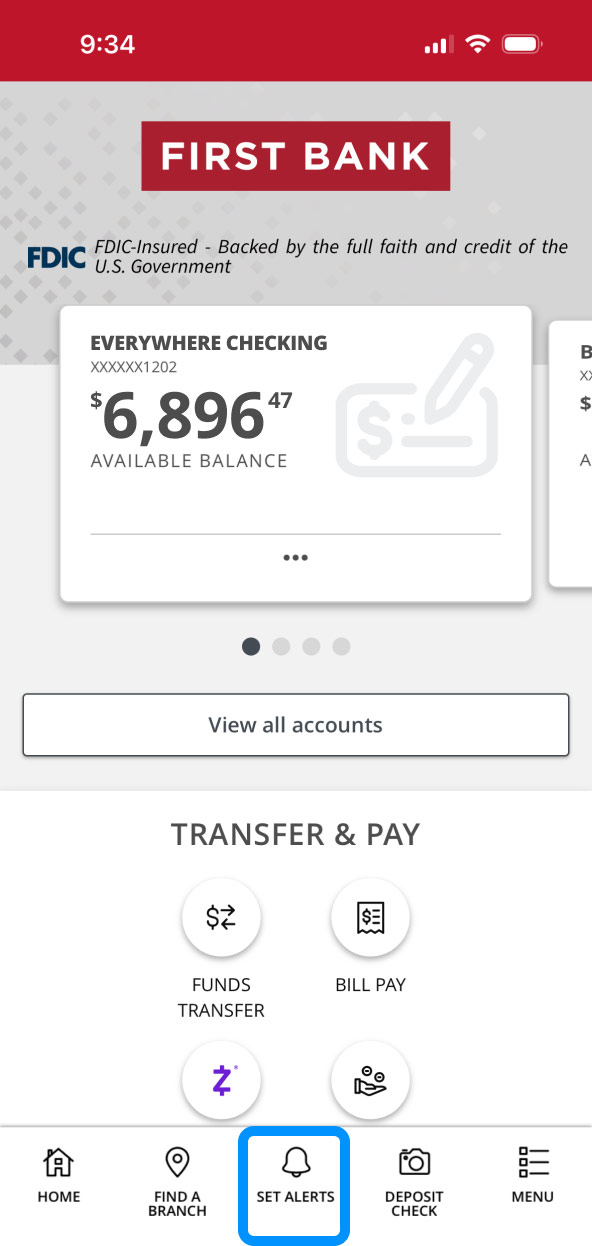
First Bank online banking screen highlighting the Set Alerts menu item.

Step 3:
Create a new alert.

Tap the “New Alert” button and choose the type of alert you want to set up from the dropdown menu.
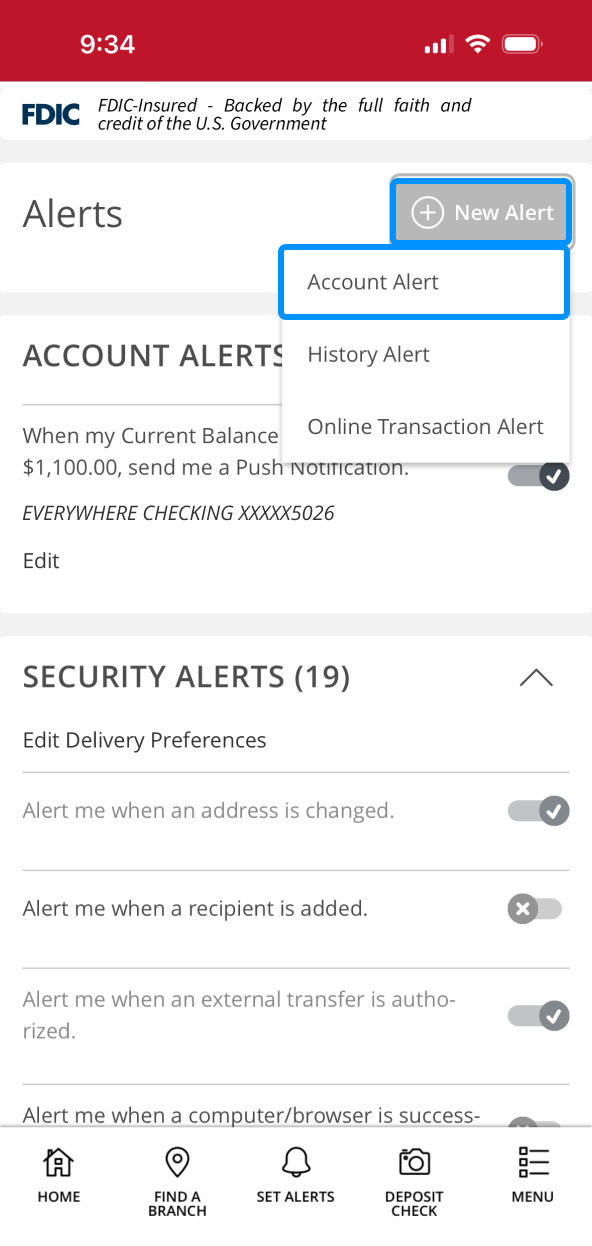
First Bank Online Banking screen highlighting the New Alert button.

Step 4:
Choose account.

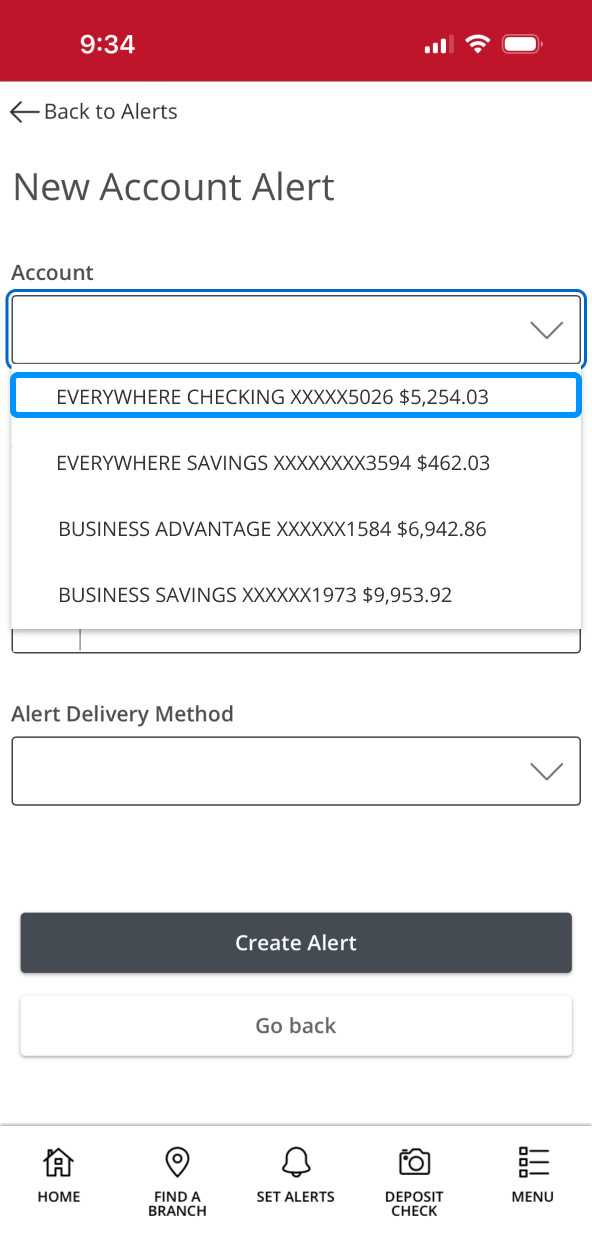
Tap the “Account” box to choose the account you want to set up an alert on.

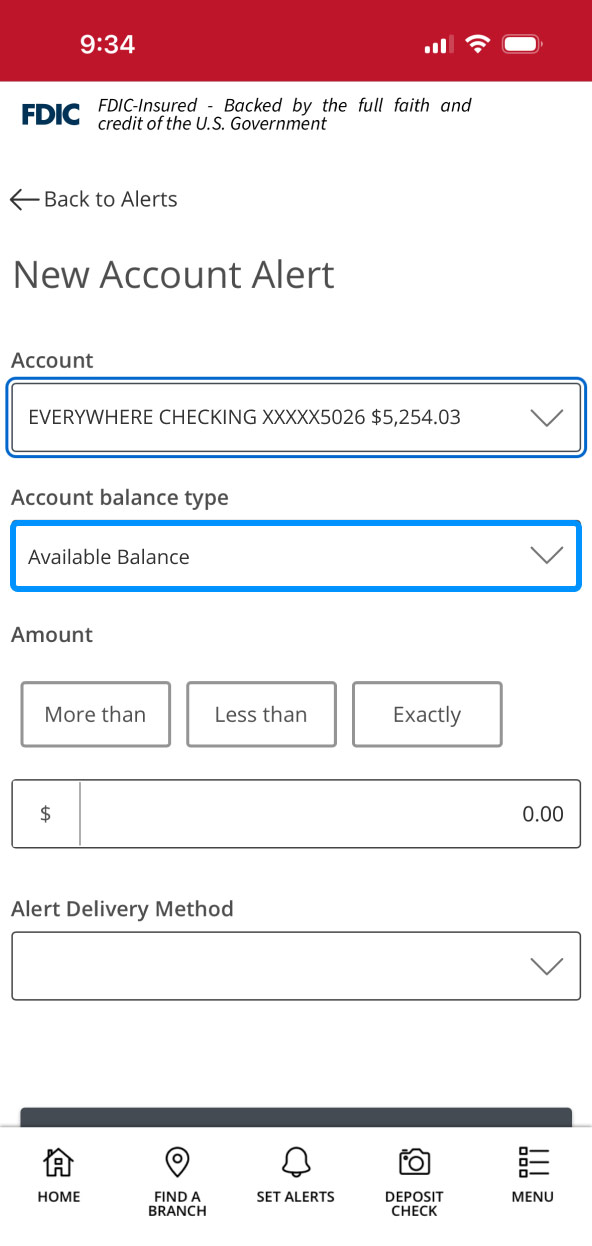
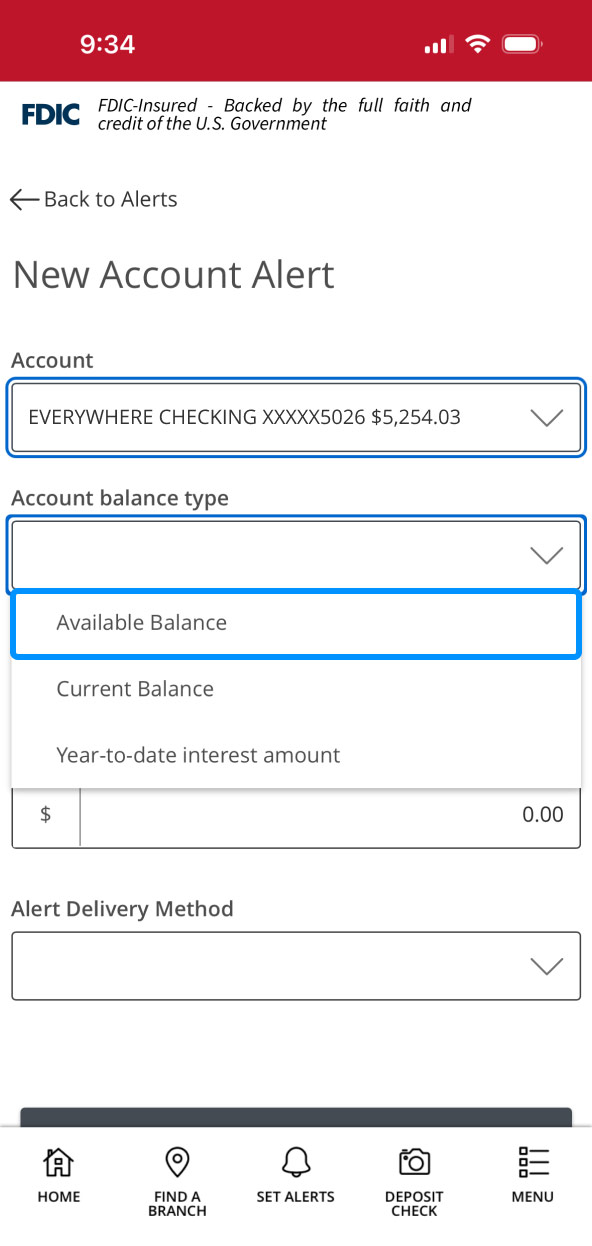
Tap the “Account balance type” box to select the account balance type.
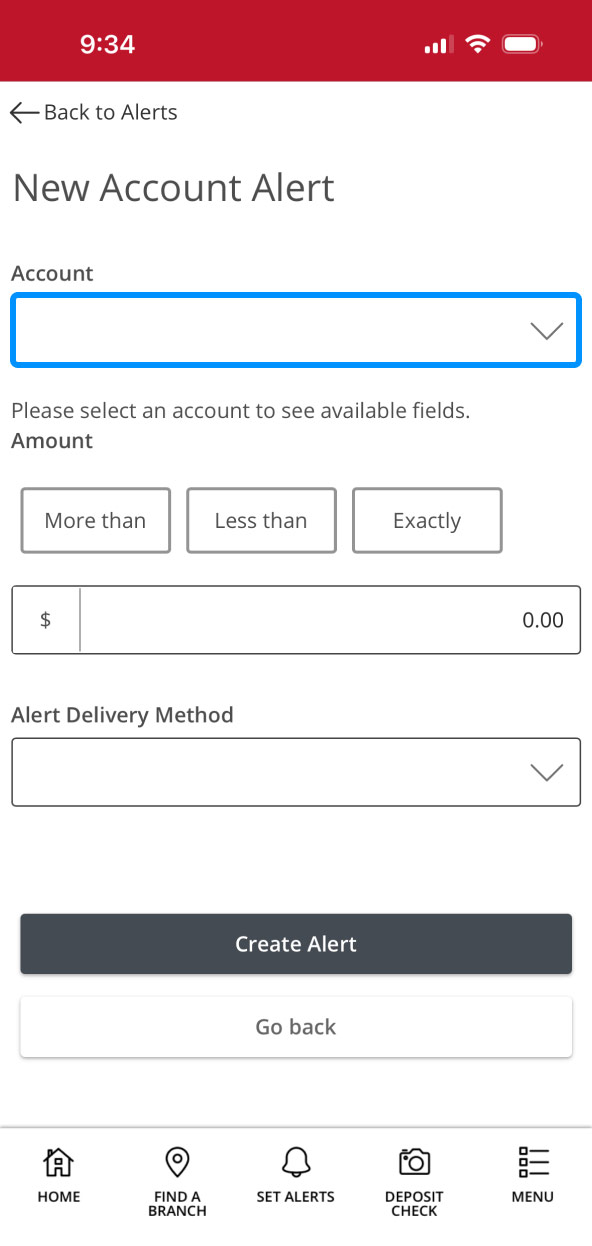
First Bank Online Banking screen highlighting the Account dropdown. First Bank Online Banking screen showing the Account dropdown opened up. First Bank Online Banking screen highlighting the account balance type field. First Bank Online Banking screen showing the account balance type dropdown expanded.

Step 5:
Enter alert parameters.

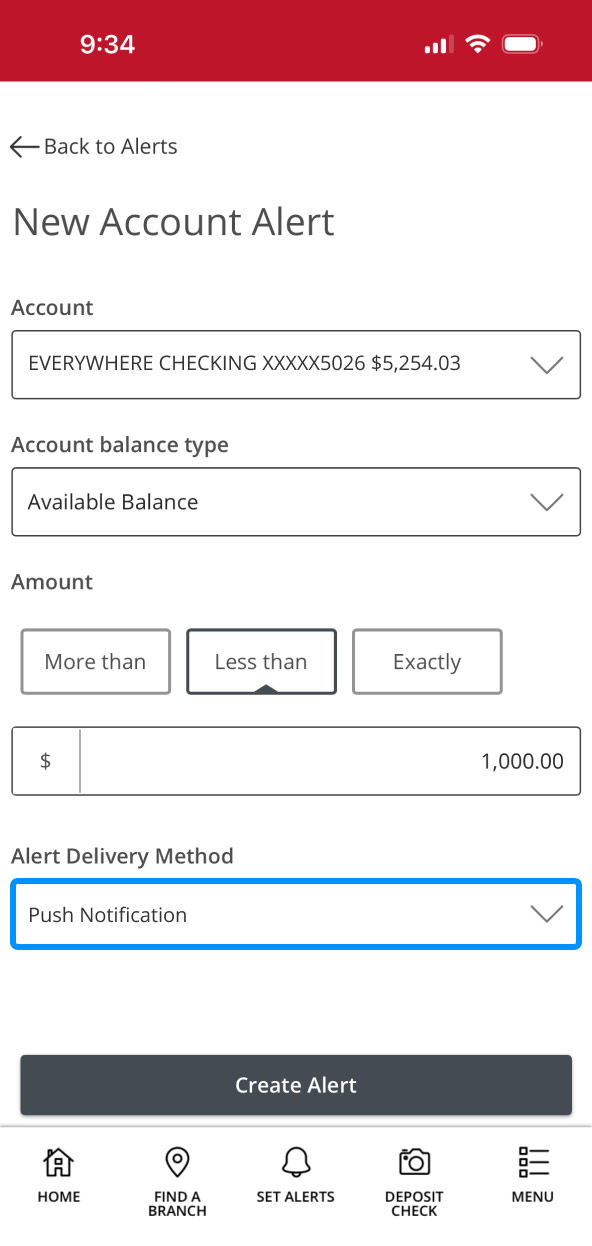
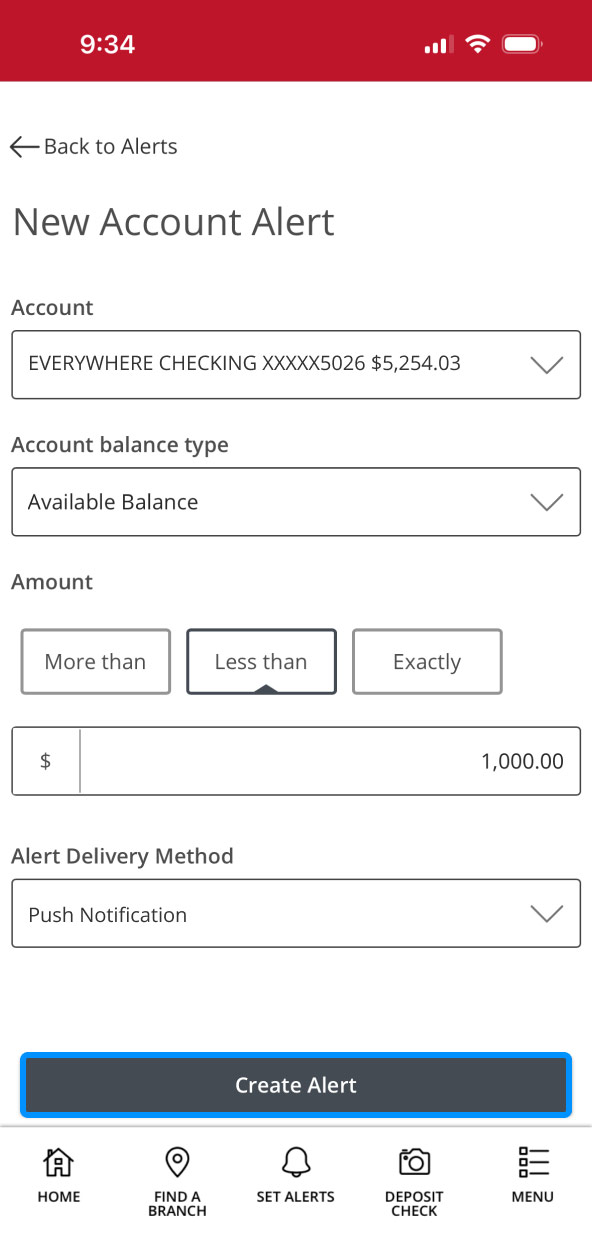
Select the threshold for your notifications by tapping on “More than,” “Less than,” or “Exactly” and entering a dollar amount below.

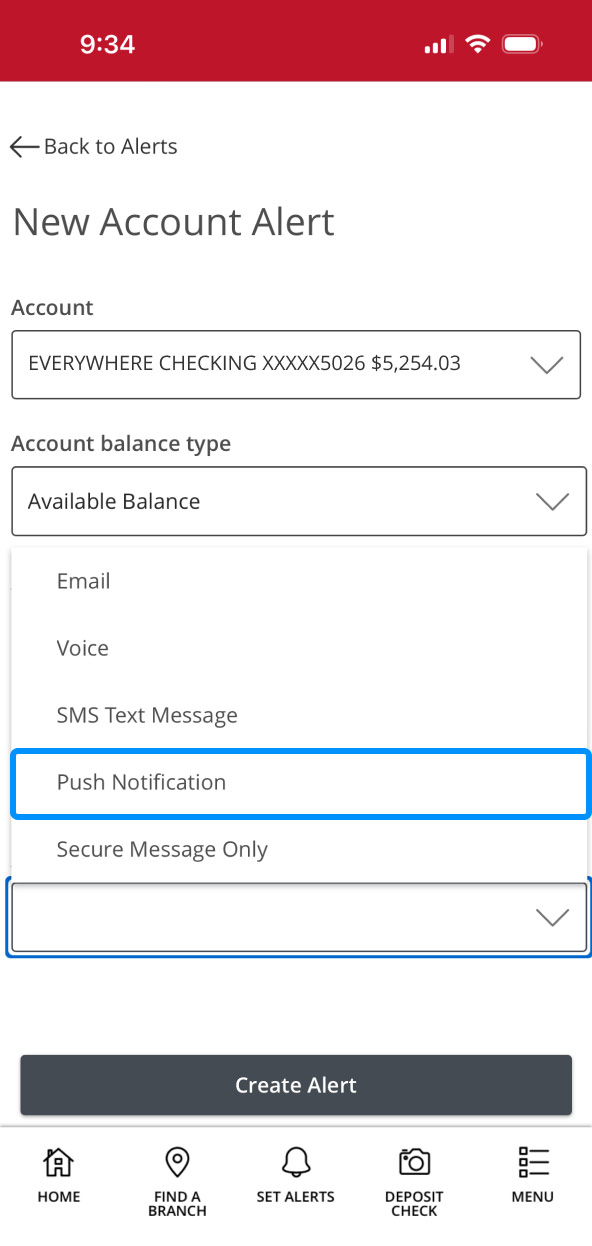
Tap “Alert Delivery Method” and choose Email, Voice, SMS Text Message, Push Notification, or Secure Message Only from the dropdown options.

Tap “Create Alert” and you will receive an alert each business morning when your account meets the parameters you set.

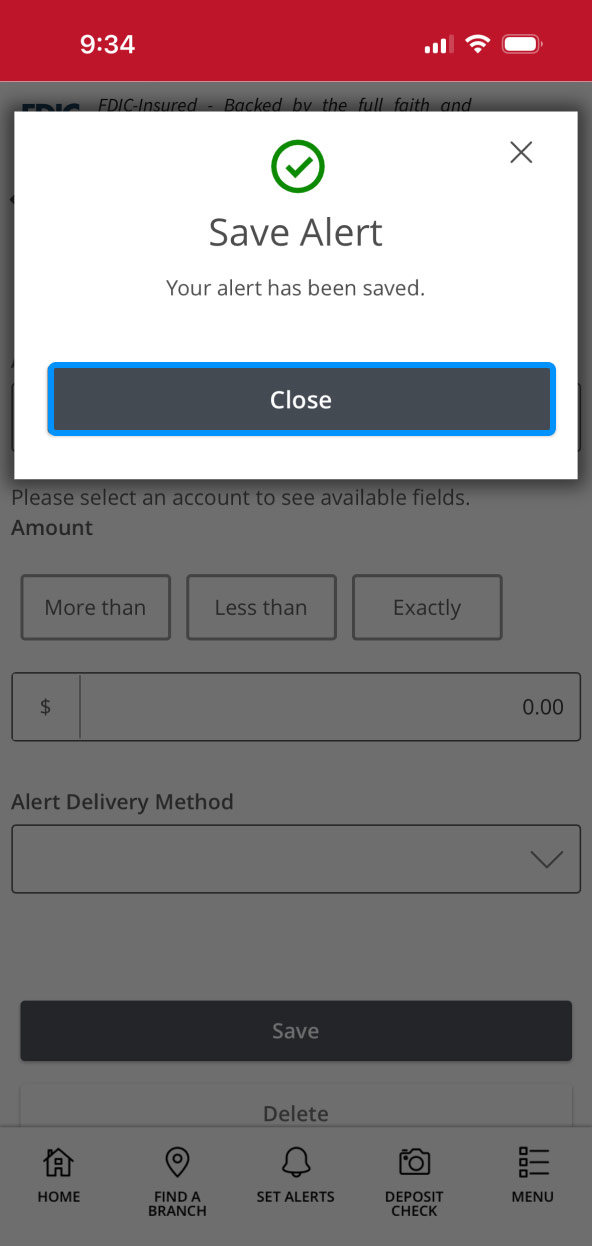
A pop-up box will confirm your alert has been saved. Tap “Close.”
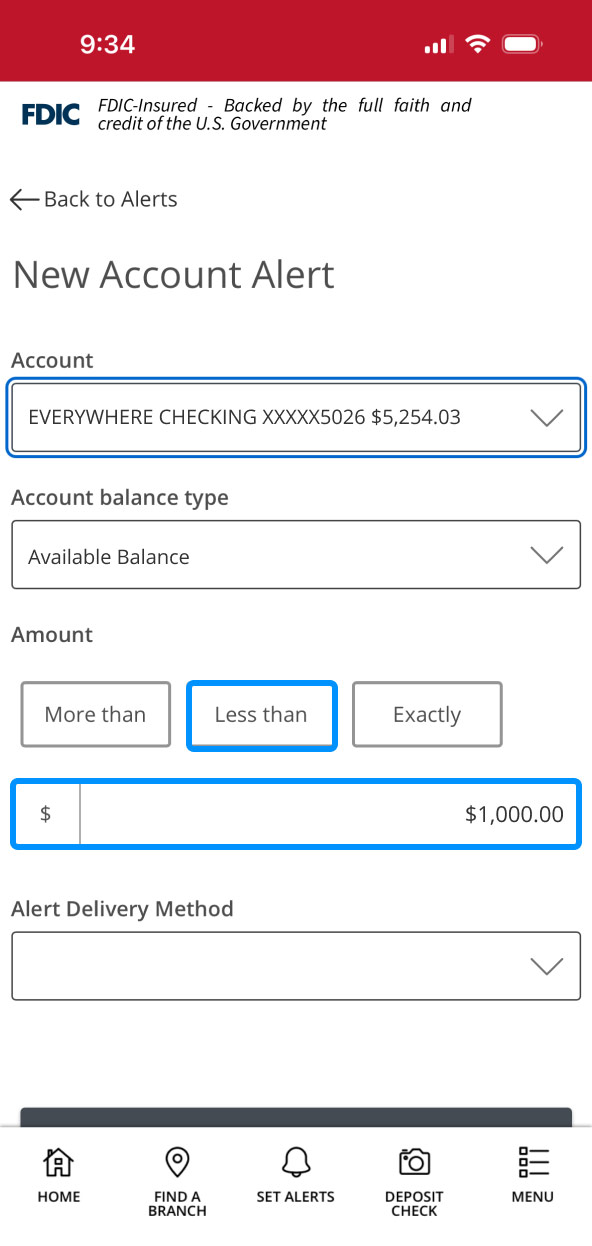
First Bank Online Banking screen highlighting various Account Alert amount fields. First Bank Online Banking screen highlighting the Alert Delivery Method field. First Bank Online Banking screen showing the Alert Delivery Method dropdown opened. First Bank Online Banking screen highlighting the Create Alert button. First Bank Online Banking screen showing the Save Alert popup and highlighting the Close button.

Explore our guided tutorials

MyMoney Trends Learn how to view your spending trends in MyMoney. Bill Pay Online bill pay makes it quick, easy, and convenient to pay your bills. Mobile Bill Pay Pay your bills from anywhere so you’re always on time. Quicken & Quickbooks Connection Learn how to set up a secure connection to your Quicken or QuickBooks software. Zelle® Split Easily split bills with friends, family and others you trust. MyMoney Debts Quickly get an overview of your debts from across linked accounts. Business Bill Pay Pay your bills quickly and easily from our secure website. Account Overview Learn how to see account and transaction details. MyMoney Link Account Learn how to link accounts from various sources into MyMoney to provide you with a complete picture of your finances. Funds Transfer Transfer money between your First Bank accounts one time or on a recurring basis. eStatements Access your statements to review, save, or print. Zelle® Request Digitally request money from friends, family and others you trust. MyMoney Budget Create a budget to reach your financial goals. Mobile Check Deposit Deposit funds from checks into your account from anywhere. Zelle® Send Digitally send money to friends, family and others you trust. Fraud Protection Secure Access Code Add a new phone number to your account to receive your secure access code. CardSwap Link your recurring payments and subscriptions to your new credit card. External Accounts Learn how to add external accounts. MyMoney Net Worth Learn how to view your Net Worth information from across various linked accounts. Account Overview Business Learn how to see account and transaction details. Account Dashboard Learn to navigate the online banking app. MyMoney Spending Quickly get an overview of what you spend your money on, organized by categories.
First Bank logo
Privacy Overview

This website uses cookies so that we can provide you with the best user experience possible. Cookie information is stored in your browser and performs functions such as recognizing you when you return to our website and helping our team to understand which sections of the website are the most popular and useful.